
















TWS (True Wireless Stereo) earbuds have become mainstream wearables, and ANC (Active Noise Cancellation) and transparency mode are increasingly standard features. Nowadays, call quality often impacts customer reviews more directly than music sound quality. When users experience “can’t hear clearly,” sudden volume fluctuations, or unstable performance during mode switching in noisy environments such as subways, streets, or offices, these issues quickly translate into negative reviews, returns, and after-sales costs.
How POLQA & 3QUEST Support R&D Decisions
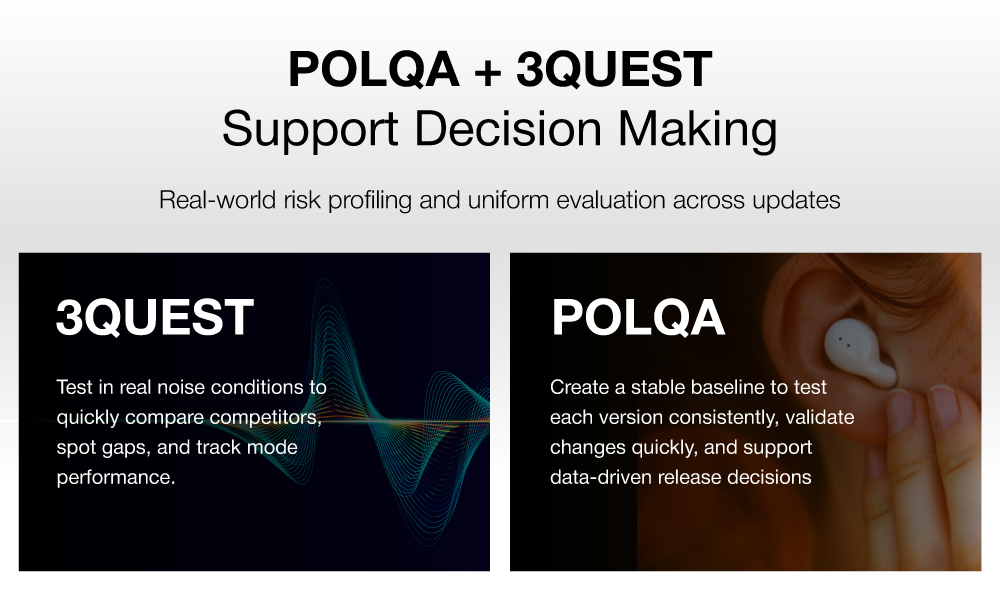
To balance both real-world risk identification and a retestable validation approach for revisions, Allion typically recommends a dual-method strategy: POLQA & 3QUEST, so the evaluation results can genuinely support R&D decisions.
The key is not “testing twice,” but connecting directional assessment and improvement acceptance into a reusable workflow: first locate the problem clearly, then confirm with a consistent approach that improvements are real.
The Customer’s Biggest Headache: “Decision-Making,” Not “Measurement”
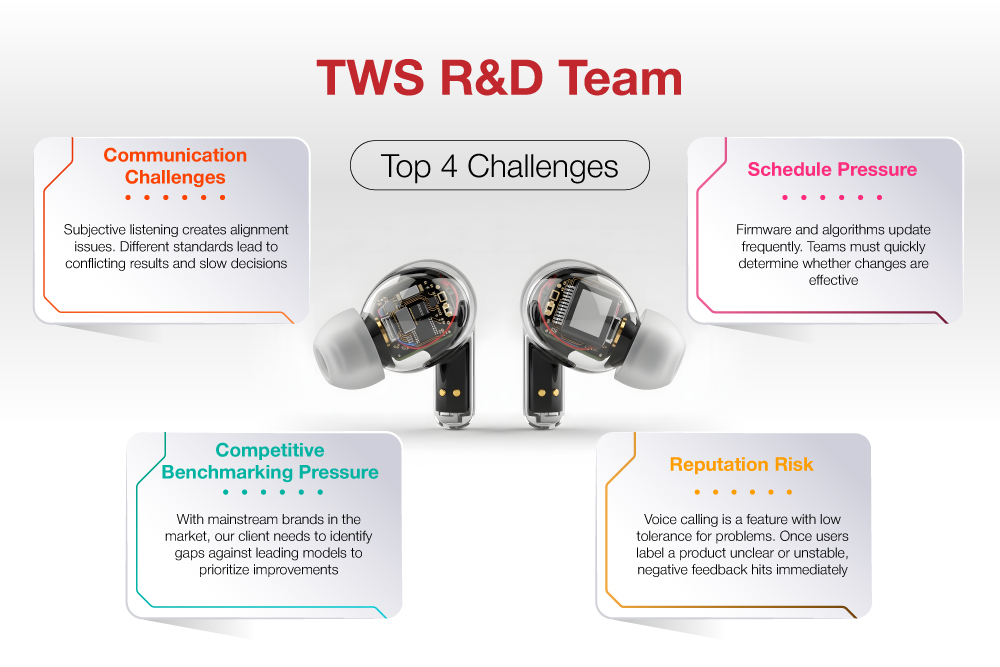
Breaking the Myth: Why a Single Method Often Creates a Dilemma
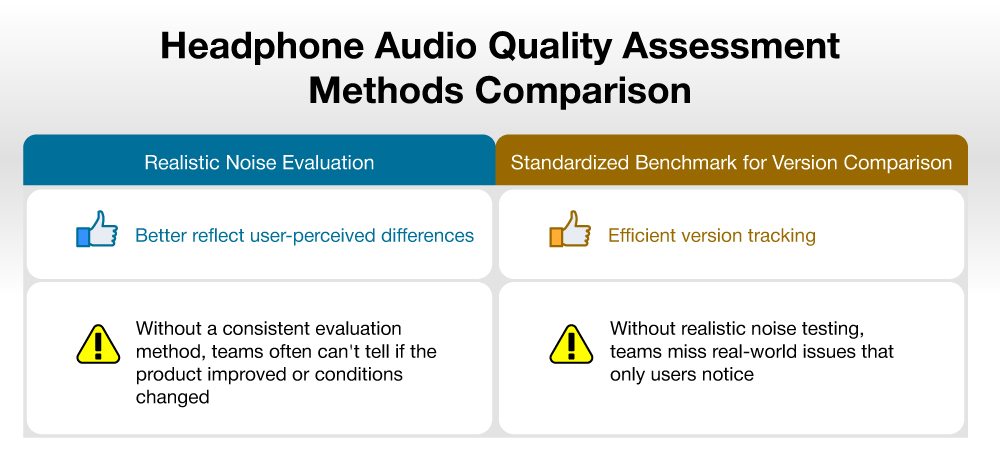
Many teams instinctively choose one evaluation method and try to “solve everything with one tool.” But in TWS and ANC contexts, a single method usually leaves a blind spot.
Four Key Ways We Help—With Visible Outcomes
With the dual-method framework, Allion focuses on actionable outcomes, not just a list of results. Typical support includes:
- Rapidly establishing a comparison baseline so gaps become visible
By comparing key usage scenarios against mainstream models, teams can identify relative positioning and pinpoint scenarios and modes where gaps are amplified—so R&D can focus on the highest-priority risks. - Converging findings into an improvement priority plan to reduce exploration costs
Once gaps are clearly located, Allion helps break issues down into debuggable directions and ranks them by impact and risk—preventing excessive time spent on repetitive attempts and shortening the parameter-tuning and revision loop. - Building revision acceptance and retest approaches to avoid repeated decision loops
With standardized acceptance methods, customers can quickly judge the effectiveness of each version change, reducing internal friction from inconsistent methods or subjective listening. - Shifting risks earlier into the development phase to reduce post-launch reputation pressure
By identifying noise-scenario or mode-switching risks before launch, customers can reduce negative reviews and after-sales burden, making quality control more predictable.
How Allion Delivers a “Method” as an Executable Consulting Service
With POLQA and 3QUEST, the key is not the tools alone, but whether results can be turned into practical improvement directions, and whether re-validation can be completed with a consistent approach. This requires cross-domain capabilities across acoustics, communications, and system integration—plus complete facilities and platform assets—so Allion can deliver decision-ready conclusions under schedule pressure.
Capability Strength: Expert Team and Method Integration (People + Know-how)
- Reality: In Taiwan’s tech industry, third-party teams with deep electro-acoustic expertise and the ability to lead such projects from a consulting perspective are relatively rare.
- Allion Advantage: Our projects are led by engineering teams with electro-acoustics and DSP expertise, capable of linking voice-quality evaluation results to real acoustic and signal-processing behaviors, then translating them into implementable improvement directions.
- Value: Deliverables are not just “test data,” but decision-support recommendations that shorten tuning time and reduce launch risk.
Facilities & Instrumentation: One-Stop Integration Across Environments and Platforms (Facilities + Instrumentation)
3QUEST is an important solution within the HEAD acoustics ecosystem. Allion has made significant long-term investments to build comprehensive automotive/communications measurement capabilities and environments, enabling noise-scenario voice evaluations to be systematic, repeatable, and comparable. This means customers don’t need to “improvise simulations”—they can reproduce scenarios consistently and reach comparable conclusions.
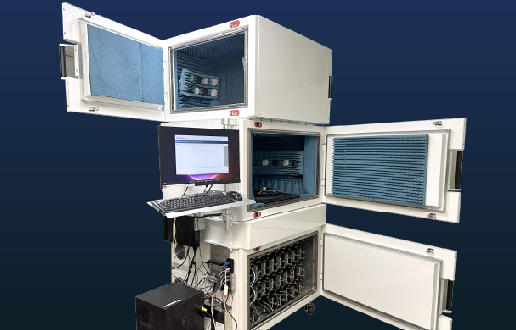
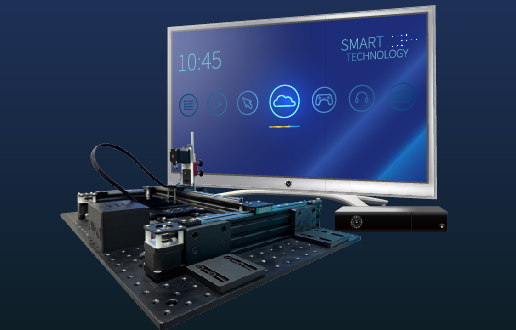
- To complete both “scenario comparison” and “baseline validation” within one project, consistent integration across environments and platforms is required. Allion operates two anechoic chambers, three listening rooms, and a full-vehicle test room, supporting end-to-end verification from baseline to scenario. We also maintain extensive Windows/iOS/Android platform assets, including libraries of phones, laptops, and tablets, helping customers quickly verify compatibility with mainstream market devices—reducing quality fluctuations and complaint costs.
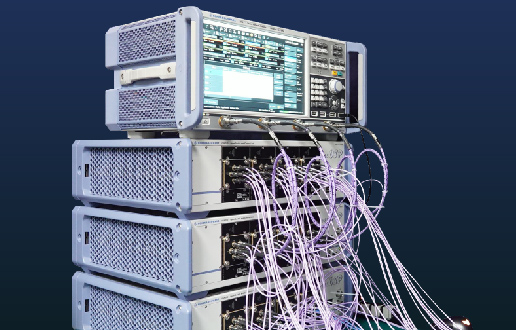
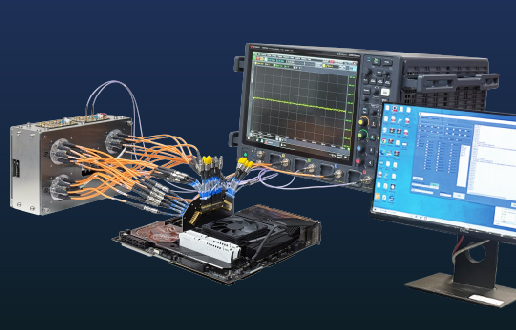
- On communications and RF capabilities, Allion has more than two CMW500 systems and over a dozen RF isolation rooms, supporting wireless conditions and interference control needs. For electro-acoustic measurement platforms, we provide tools such as Audio Precision Audio Analyzers and Listen SoundCheck, ensuring consistency and traceability in acoustic and electro-acoustic measurements.
- Value: Customers can complete cross-environment, cross-method, and cross-platform integration within a single department—avoiding data stitching and conclusion alignment across multiple vendors—so decisions are faster and execution is smoother.
Who Benefits Most from This Approach?
- New product development requiring rapid positioning against mainstream models
- Frequent firmware/algorithm updates requiring a retestable acceptance approach
- High sensitivity to call-quality reputation; risks must be controlled before launch
- Internal delays caused by subjective listening or inconsistent criteria
- Multi-platform compatibility challenges; desire to reduce complaints and avoid large-scale rework costs

Faster Decisions, Faster Improvements, More Controllable Launch Risk
In a market where TWS and ANC are standard, call and voice experience has become a decisive capability for reputation. Allion recommends POLQA + 3QUEST not to increase testing volume, but to help customers convert voice experience from “subjective debate” into “decision-ready evidence,” and to build a reusable improvement-and-acceptance workflow.
If you are facing mainstream model comparisons, version acceptance, and launch risk management needs, Allion can provide an integrated consulting service—from scenario evaluation and baseline validation to improvement recommendations and re-validation—helping your team converge quality faster and launch with greater confidence.