












Why is casting your phone screen to a TV still so frustrating?
In daily life, smartphones have become essential due to their portability and convenience. However, watching videos on a small screen for a long time can easily cause eye strain and even neck and shoulder discomfort. Casting your phone screen to a large smart TV becomes a healthier and more comfortable choice.
However, based on Allion’s test experience, the screen casting function of smart TVs is highly affected by wireless network conditions, device compatibility, and software integration—making it one of the most failure-prone user experiences

Case Study: A Hotel Fully Upgraded Its Smart TVs, but Guest Satisfaction Became Even Worse
A hotel upgraded all guest-room TVs so customers could cast content from their phones directly to the smart TV—creating a home-like large-screen experience without the need to download apps or enter login credentials. This was expected to significantly improve convenience, security, and overall stay satisfaction.
However, after the upgrade went live, satisfaction related to smart TV screen casting became surprisingly poor. Guest complaints mainly focused on:
1. Smartphones occasionally failed to detect the TV.
2. The phone connected to the TV, but screen casting frequently failed or disconnected on its own
Three Interoperability Challenges Even Leading Smart TV Vendors Struggle to Fix
The hotel reported these issues to the TV vendor, but the vendor was unable to resolve them and eventually sought help from Allion’s expert team.
During the consultation, the vendor highlighted the following challenges:
1. Time-consuming verification|Issues could not be reproduced
The problems occurred randomly, making it extremely difficult for engineers to reproduce, debug, and verify—wasting significant manpower and time.
2. Insufficient test devices|Real-world scenarios unmanageable
Hotel guests use diverse phone brands and models, multiple casting protocols (Miracast, Chromecast, AirPlay), and each room has Wi-Fi APs from different brands and models. The vendor lacked the test equipment to cover this complexity
3. Test environment limitations|Problems difficult to analyze
Hotels are high-density wireless environments where bandwidth congestion, interference, and unstable connections are common. Without controlled RF environments or professional instruments, the vendor could not analyze root causes clearly.

DisplayAI for Hospitality — Allion’s Smart TV & Screen Casting Validation Solution
After analyzing the case, Allion recommended adopting the Allion DisplayAI Test Solution, a high-efficiency platform that accelerates root-cause investigation and issue resolution. Key advantages include:
- Fully automated operations and result verification for maximum efficiency
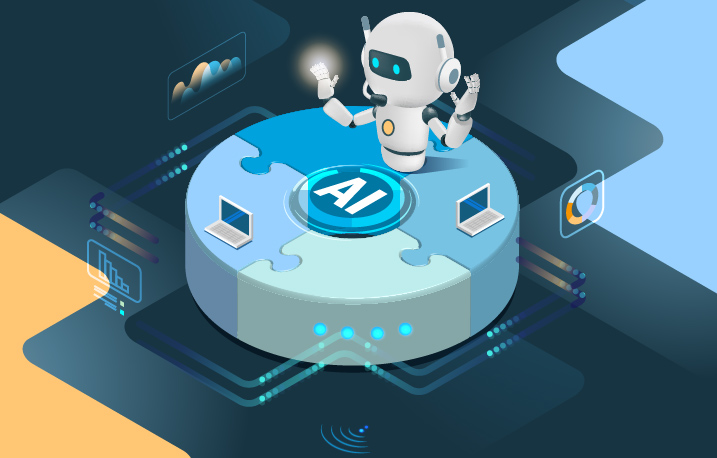
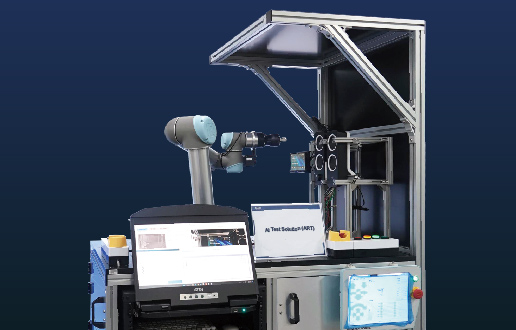
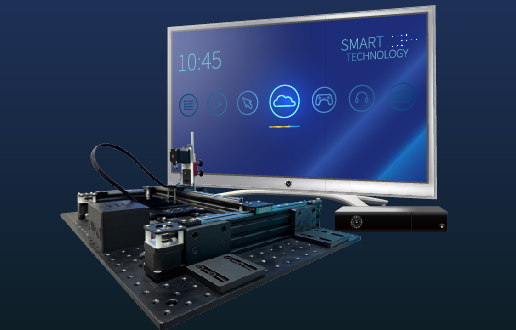
Allion DisplayAI is an automated test platform designed for audio-visual and display products. It performs hundreds or even thousands of consistent, repeatable test cycles around the clock. It automatically checks and records image/audio results at each step—minimizing human error and boosting efficiency.
- Cross-brand, cross-platform validation with end-to-end real user simulation
The solution supports mainstream casting protocols (Miracast, Chromecast, AirPlay) and various phone models. It also simulates real user behavior by controlling the TV via the remote, making it suitable for multiple TV brands, OS platforms, and models.
- Compact size, ideal for wireless-controlled and isolated test environments
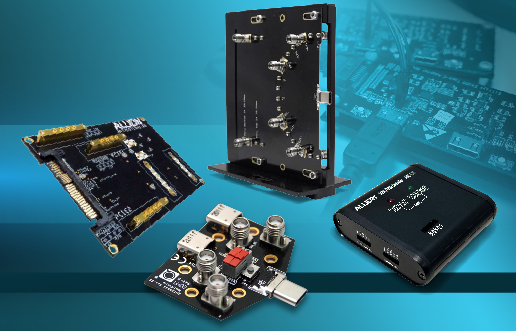
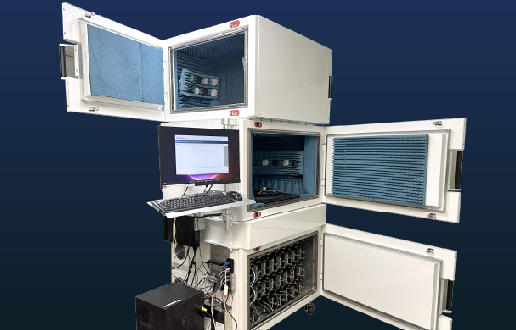
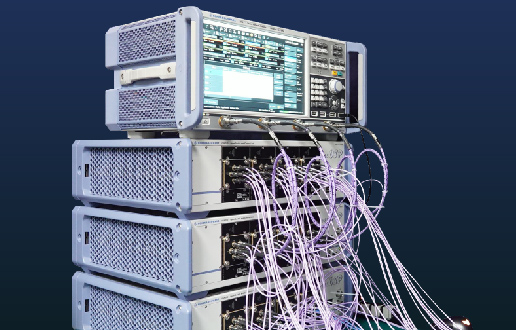
Its small form factor allows easy integration with RF isolation chambers and signal generators, enabling controlled and repeatable wireless-environment testing and in-depth analysis.
Reference: Allion DisplayAI Test Solution for Remote-Controlled Product | Allion Labs
Results: Allion Helps Improve Casting Success & Stability to Over 98%
For this case, Allion used DisplayAI to identify three primary root causes:
Wireless casting modules did not always activate in time, causing phones to fail to detect the TV.
When interference reached a threshold, packet loss occurred, leading to abnormal display or interrupted casting.
Automated repeated tests revealed incompatibility between the Wi-Fi module and certain AP models.
Allion provided detailed test results, analysis data, and key logs, enabling the vendor to improve casting stability and success rates to over 98%.
Additionally, the client appreciated that the DisplayAI system is programming-free with a fully visual interface, allowing test engineers to easily create custom scenarios with minimal training. The vendor eventually purchased multiple units to enhance internal validation efficiency.
Facing complex display technologies and wireless scenarios, manual testing is no longer enough. The Allion DisplayAI Test Solution provides AI-driven automated testing and verification to help manufacturers ensure product quality and stay competitive in the market.
If you are encountering challenges with TV display or screen-casting applications, let Allion help you take the first step toward intelligent validation.