











In-Car Wireless Consulting Program with Road Test

In-Car Wireless Consulting Program with Road Test

Allion’s In-Car Wireless Consulting Program provides Wi-Fi, Bluetooth and BLE, wireless CarPlay and Android Auto, coexistence, and on-road validation across real-world driving scenarios. From lab testing to in-country road tests, we help identify connectivity issues early, reduce development risks, and improve market readiness.

Published: 3 Aug 2026
Last updated: 8 Sep 2026
Maintained by Allion Labs


Standards and regulation tracker

Test standards on this page last verified against the issuing bodies on 8 September 2026 and aligned to the current published requirements of the Wi-Fi Alliance, Bluetooth SIG, Broadband Forum, Car Connectivity Consortium, ITU-T, Apple CarPlay and Android Auto programs. Full list with official references in Standards and regulations.

In-car wireless validation is the testing of a vehicle’s Wi-Fi, Bluetooth, BLE, UWB and phone-projection behavior as one integrated system, under the conditions of a real metal cabin and a real road, rather than one radio at a time on a bench. Allion Labs, Inc. is an ISO/IEC 17025-accredited independent test laboratory, a Wi-Fi Alliance Authorized Test Laboratory and a Bluetooth Qualification Test Facility, and has worked in the automotive electronics ecosystem for over 16 years.

The program combines wireless architecture consulting, in-car Wi-Fi and Bluetooth performance testing, wireless CarPlay and Android Auto interoperability across a 1,000+ device and OS matrix, coexistence and stress testing, multi-logo certification, AI robotic automation running real user journeys 24/7, and in-country road test across North America, Europe and Japan. To start, use the Inquiry form or email service@allion.com.

1,000+
devices in the interop matrix
10,000+
scripted projection steps
30+
standards bodies
16+
years in automotive
24/7
robotic test operation
3
road-test regions
1,000+ devices in the interop matrix
10,000+ scripted projection steps
30+ standards bodies
16+ syears in automotive
24/7 robotic test operation
3 road-test regions

What In-Car Wireless Validation is

In-car wireless validation tests the vehicle’s radios as the driver experiences them: a phone that must project over Wi-Fi while streaming audio over Bluetooth, in a cabin whose glass and metal create reflections and dead spots, on bands already crowded by passenger devices and a wireless charging pad. It is distinct from the things it is most often confused with:

Certification

Wi-Fi Alliance, Bluetooth SIG, CarPlay and Android Auto programs prove conformance against a fixed reference set. It is necessary and it is not sufficient: certified head units still fail to reconnect to specific phone models on specific OS builds.

Single-radio bench testing

Measures one radio in isolation. Real cabins run several radios at once, and most field complaints come from the interaction between them rather than from any single radio’s performance.

In-car wireless validation

Answers the third question: across the phones owners actually carry, the scenarios they actually drive and the RF environments they actually park in, where does the system fail, and why.

The distinguishing inputs are the device matrix, the scenario library and access to real roads. A defect that only appears at the fourth ignition cycle, in an underground car park, on one Android build, cannot be found any other way.

In-car Wireless Connectivity Challenges: from Lab Validation to Real-World Driving

Phone integration is now the largest single quality problem in the U.S. automotive market, and it is the only area getting worse. The table below sets out the published J.D. Power findings that define the problem, with the primary source for each figure.

Table 1 — Phone-integration and infotainment quality, J.D. Power 2026 studies (PP100 = problems per 100 vehicles; lower is better)
Finding Figure Study and Source
Android Auto and Apple CarPlay connectivity — the top industry problem for a third consecutive year 8.9 PP100 J.D. Power 2026 U.S. Vehicle Dependability Study
Of the top five industry problems, the number directly related to mobile phone integration 4 of 5 J.D. Power 2026 U.S. VDS
Built-in Bluetooth systems 5.5 PP100 J.D. Power 2026 U.S. VDS
Wireless charging pads 5.1 PP100 J.D. Power 2026 U.S. VDS
OEM app connectivity 4.7 PP100 J.D. Power 2026 U.S. VDS
Those four phone-integration issues combined — nearly half of all infotainment category problems 24.2 PP100 J.D. Power 2026 U.S. VDS
Infotainment problems, mass market — the only category to worsen year over year 44.4 PP100 J.D. Power 2026 U.S. Initial Quality Study
Infotainment problems, premium segment 38.3 PP100 J.D. Power 2026 U.S. IQS
Increase attributable to Android Auto and CarPlay connectivity — the largest single contributor to the infotainment decline +1.4 PP100 J.D. Power 2026 U.S. IQS
Share of owners reporting a distracted-driving problem who named infotainment or the touchscreen as the source 46% J.D. Power 2026 U.S. IQS

The 2026 IQS was released on 25 June 2026 and is based on responses from 78,514 purchasers and lessees of 2026 model-year vehicles surveyed after 90 days of ownership, across 227 questions and 10 categories. Full references in Sources and references.

Two consequences follow for an OEM or Tier 1. First, connectivity is now the fastest available lever on a quality ranking, because it is where the problems are concentrated. Second, these are not defects a bench finds: they surface at the fourth ignition cycle, in an underground car park, on one phone model, after a firmware update the vehicle team never saw.

Six Wi-Fi and Bluetooth Scenarios — and How Each One Fails

Every scenario shares one cabin, one antenna set and two crowded bands. They must be validated together, not one radio at a time.

Table 2 — In-car wireless scenarios, what the owner does, and the field failure mode
Scenario What the Owner Does Field Failure Mode
Wireless CarPlay / Android Auto Driver enters; phone auto-projects maps, media and calls Fails to reconnect at start-up; drops mid-route; laggy touch and voice
Bluetooth calls and audio Hands-free calls, A2DP and LE Audio streaming, multipoint phones Choppy audio, echo, one-way voice; the wrong phone answers the call
OTA updates over Wi-Fi Vehicle downloads software overnight via home or depot Wi-Fi Stalled downloads on congested channels; failed update campaigns
In-cabin Wi-Fi hotspot Family streams video on two to four devices via the car’s 4G/5G hotspot Buffering in rear seats; hotspot fights the projection link for spectrum
BLE / UWB phone-as-key Owner unlocks and starts the car with a phone or wearable Slow or failed unlock at the door; welcome scenario misfires
Wearables, apps and sensing Watches, TPMS, child-presence and seat sensing on BLE links Missed alerts and dropped sensor links in a crowded 2.4 GHz band

Real-World In-Car Wireless Performance Risks and User Scenarios

A vehicle cabin is one of the most hostile RF environments a consumer radio operates in: reflective surfaces, a fixed antenna position, high-power switching electronics and two shared bands. The risks below are the ones a metal cabin makes materially worse.

01
Cabin Multipath and Shadowing
Glass-and-metal reflections create dead spots seat to seat; antenna placement decides the rear-seat experience.
02
External Congestion
Parking lots, city traffic and drive-thrus are dense Wi-Fi environments; neighboring networks crush throughput.
03
Charging and Electrical Noise
Wireless charging pads, USB 3 and EV power electronics raise the 2.4 GHz noise floor inside the dash.
04
Self-Interference
Hotspot, projection link and OTA radio compete for the same 5 GHz airtime; 2.4 GHz clients collide with Bluetooth.
05
Thermal and Long-Run Drift
Dashboard heat throttles radios; failures appear after hours of streaming, not in a five-minute check.

User Scenarios at Stake

  • In-cabin 4G/5G hotspot for passengers
  • Rear-seat entertainment and video streaming
  • Wireless projection transport
  • OTA software downloads at home or depot
  • Companion-app control and diagnostics

Allion Validates It

Allion’s Golden Methodology-based in-car Wi-Fi performance (coverage, throughput, latency, multi-client), full-cabin spatial mapping, long-duration stability — in RF chambers and real vehicles.
01
2.4 GHz congestion
Bluetooth shares 2.4 GHz with the hotspot and passenger devices; adaptive hopping runs out of clean channels.
02
Pairing-list corruption
Stale bonds, full device lists and OS updates cause the “forget and re-pair” ritual owners hate.
03
BLE key reliability
RSSI-based ranging is fooled by pockets, body blocking and reflections; slow unlocks erode trust in digital keys.
04
Audio artifacts
Clicks, dropouts, echo and one-way audio under interference or codec renegotiation — the top Bluetooth complaint.
05
Multipoint conflicts
The wrong phone grabs the call; navigation prompts duck music incorrectly across two connected phones.
06
Coexistence with projection
Bluetooth handshake and Wi-Fi projection start-up interact; poor coexistence design breaks both features at once.

User Scenarios at Stake

  • Hands-free calling and voice assistants
  • Music streaming over A2DP and LE Audio
  • Multipoint with two phones in one car
  • BLE phone-as-key and welcome scenarios
  • TPMS, sensing and wearable companions

Allion Validates It

Pairing & reconnection matrices across 1,000+ real equipment/devices, audio quality (objective + subjective), multipoint logic, BLE key ranging & reliability, and BT SIG qualification support.

Allion’s Solution

Four service layers, scoped independently or as one program: consulting before hardware freeze, testing against the device matrix, certification management, and AI automation to make the matrix affordable to run repeatedly.

Table 3 — Service layers, scope and typical output
Layer Scope
Wireless architecture and spec review Antenna placement, band plans and coexistence strategy for Wi-Fi, Bluetooth and projection, reviewed before hardware freeze.
Requirement and test-plan design OEM-grade wireless requirement sets and acceptance criteria mapped to real user scenarios.
Issue analysis and debugging Root cause of field complaints — sniffer traces, RF capture and log forensics carried to a fixable defect.
Build-your-own-lab and training Lab design, equipment selection and engineer enablement for in-house wireless validation.
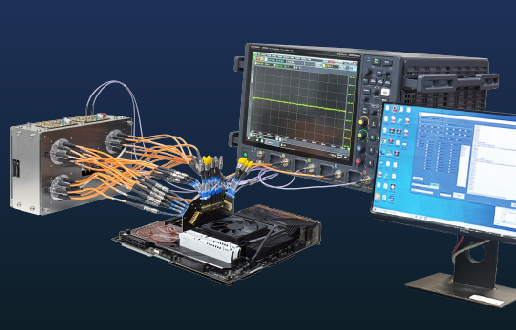
In-car Wi-Fi performance testing Golden Methodology-based coverage, throughput, latency and multi-client tests mapped to every seat in the cabin.
Wireless CarPlay and Android Auto interoperability Connection, reconnection, audio, navigation and voice across a 1,000+ device and OS matrix, with 10,000+ scripted steps.
Bluetooth and BLE validation Pairing, multipoint, HFP, A2DP and LE Audio quality, and BLE key ranging under real interference profiles.
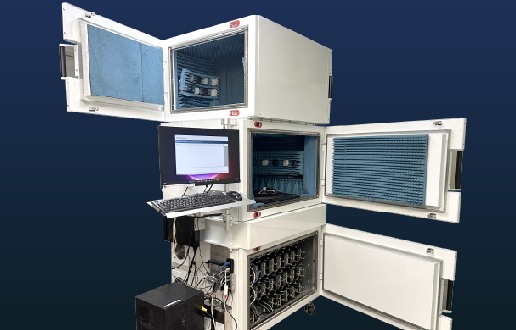
Coexistence and stress testing Multi-radio scenario testing in RF chambers and real vehicles: hotspot, projection, BLE and charging simultaneously.
Certification management Wi-Fi Alliance, Bluetooth SIG, CarPlay and Android Auto programs run in parallel by a single program manager.
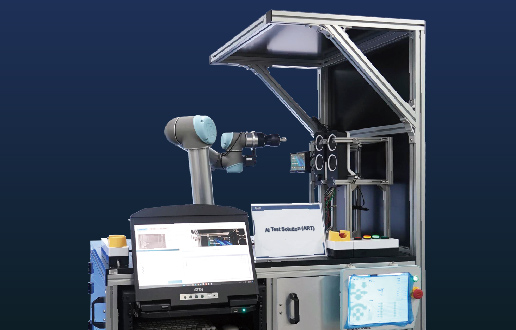
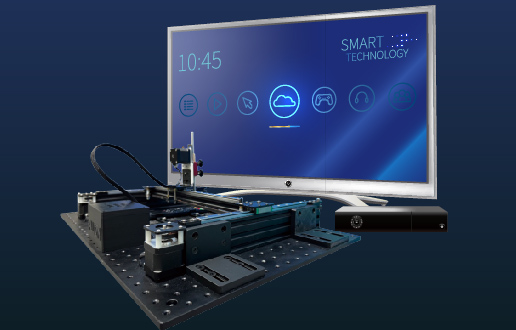
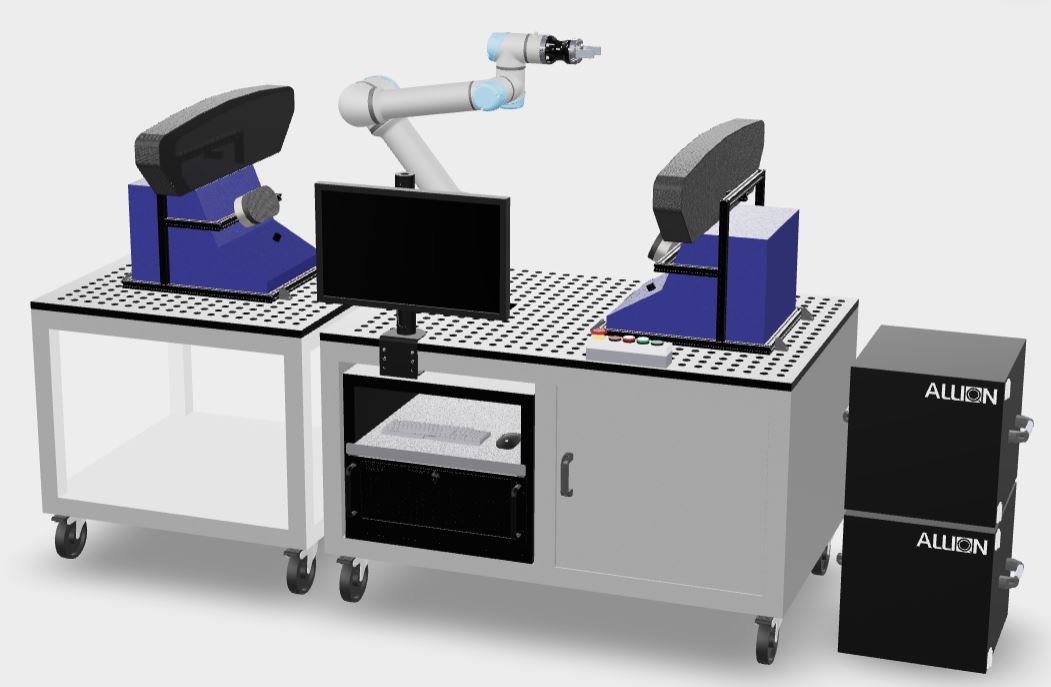
AI robotic automation (ART) Robots operate real phones and head units — tap, swipe, plug, speak — replaying entry-to-exit journeys with repeatable actuation.

Road Test Services: Lab Results Proven on Real Roads

Field failures reproduced, root-caused and regression-locked before owners ever see them. See also the In-Country Road Test Consulting Program.

Table 4 — Service layers, scope and typical output
Activity What It Covers
Scenario drive routes City, highway, tunnels, underground parking and drive-thrus across North America, Europe and Japan — the RF environments that break wireless in the field.
Projection and hotspot on the move CarPlay and Android Auto reconnection at every ignition cycle, handover through dead zones, rear-seat streaming at speed.
BLE and UWB key field trials Walk-up unlock, welcome scenarios and ranging accuracy in real parking lots, pockets and crowded garages.
Instrumented test vehicles Sniffers, RF recorders, GPS-tagged logs and cabin cameras capture every drop with time-aligned evidence.
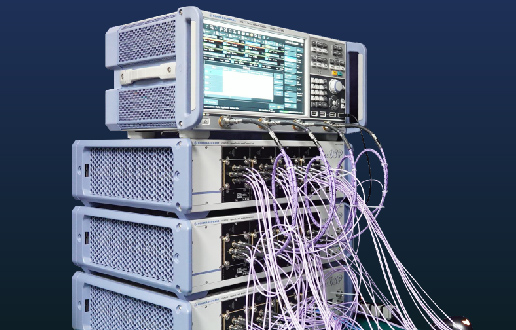
Field-failure reproduction Road RF captures replayed through the Allion Wireless Equipment (AWE) Solution in the chamber — one-off road glitches become repeatable lab defects.
Benchmark and competitor drives Same route, same phone matrix, competing vehicles — quantified gaps a quality team can act on.

AI Robotic Automation: Before and After

Manual in-car wireless testing is limited by the manned shift. Allion’s ART robotic platform operates real phones and head units unattended around the clock, replaying the same user journey with identical actuation — which turns a sampled device matrix into a fully swept one and a weeks-long regression cycle into days.

Table 5 — In-car wireless validation before and after AI robotic automation
Validation Area Before — Manual Testing After — ART Robotic Automation
Test hours per day One manned shift, typically 8 hours 24-hour unattended operation

Benefit: 3× test hours per calendar day
Ignition-cycle reconnection Tens of cycles per shift; limited by operator fatigue Cycles replayed continuously with identical actuation

Benefit: Rare reconnection defects become reproducible
Device and OS coverage A sample of the matrix per software drop Full 1,000+ device library re-runnable per drop

Benefit: Coverage no longer traded against schedule
Intermittent failure capture Rare faults occur between shifts and go unlogged Continuous logging with time-aligned video, sniffer and head-unit logs

Benefit: Evidence captured at the moment of failure
Regression cycle per drop Weeks Days

Benefit: Every drop regression-tested before it reaches a vehicle
Result consistency Operator variance in touch, timing and sequence Identical robotic actuation on every run

Benefit: Differences attributable to the build, not the tester
On-screen verification Human observation, recorded by hand Computer vision verifies projection UI, pairing dialogs and audio state

Benefit: Objective pass/fail on visual behavior

Why does robotic automation speed up in-car wireless validation?
Because the constraint in this kind of testing is repetition, not complexity. A projection reconnection defect that appears once in two hundred ignition cycles cannot be found by an engineer performing twenty cycles a day, but it is routine for a robot performing them continuously overnight. The robot also removes operator variance, so when a result changes between two software drops the change is attributable to the build.

Which technologies does the ART in-vehicle platform apply to?
Wireless CarPlay and Android Auto, Bluetooth Classic and LE Audio, BLE phone-as-key and digital key journeys, in-car Wi-Fi and 4G/5G hotspot performance, voice assistant and HMI interaction, and full infotainment software regression. Any scenario a driver performs by hand or by voice can be scripted and replayed.

Standards and Regulations This Program Works to

Test scope is mapped to the published requirements of the bodies below. Each entry links to the issuing organization so the requirement can be checked at source.

Table 6 — Standards, certification programs and regulatory requirements, last verified 8 September 2026
Domain Standard or program Issuing body
Wi-Fi certification Wi-Fi CERTIFIED 6, 6E and 7 Wi-Fi Alliance
Wi-Fi performance TR-398 / BBF.398 performance test plan Broadband Forum
Bluetooth Bluetooth Qualification — Classic, LE and LE Audio Bluetooth SIG
Phone projection CarPlay (MFi program) Apple
Phone projection Android Auto Google
Digital key CCC Digital Key (BLE and UWB) Car Connectivity Consortium
Ultra-wideband FiRa certification FiRa Consortium
Hands-free voice quality ITU-T P.1100, P.1110 and P.1120 ITU-T
Radio regulatory — United States 47 CFR Part 15 FCC
Radio regulatory — Europe Radio Equipment Directive 2014/53/EU; EN 300 328, EN 301 893 ETSI
Radio regulatory — Japan Radio Law type certification MIC Japan
Allion is an Authorized Test Laboratory for more than 30 certification programs, including Wi-Fi Alliance — among the first Wi-Fi 7 Authorized Test Labs worldwide and the only laboratory in Asia offering all Wi-Fi certification programs — and is a Bluetooth Qualification Test Facility. Regional radio regulatory approval is supported through Allion’s accredited RF laboratories.

Why Choose Allion for In-Car Wireless Validation?

Save Cost

  • Quality’s rule of ten: a wireless defect costing 1× to fix at design costs roughly 10× at integration and 100× once vehicles ship. Scenario testing moves defects left.
  • 24/7 robotic automation multiplies test coverage per engineer and compresses regression cycles from weeks to days, cutting per-cycle validation cost.
  • A shared 1,000+ device library and accredited one-stop certification remove duplicated lab investment and vendor hand-offs.

Reduce Risk

  • Phone-integration failures are the top U.S. dependability problem at 8.9 PP100 in the J.D. Power 2026 VDS. Proactive interoperability testing attacks the largest single warranty-complaint driver.
  • Coexistence and interference testing before launch prevents field-only failures that trigger service campaigns, OTA firefighting and dealer visits.
  • Every iOS and Android release is regression-tested against the fleet’s head units — protection across a 10 to 15 year vehicle lifecycle.

Raise Satisfaction

  • Infotainment was the only category to worsen in the J.D. Power 2026 IQS, and CarPlay and Android Auto connectivity was the largest single contributor. Fixing connectivity is the fastest available lever on a quality ranking.
  • Seamless projection is a purchase decision, not a convenience feature: reliability protects revenue, not just ratings.
  • Fewer glitches means fewer distracted-driving events: 46% of owners reporting a distraction problem named infotainment or the touchscreen as the source.

Frequently Asked Questions (FAQ)

What is in-car wireless validation, and how is it different from Wi-Fi or Bluetooth certification?

Certification proves a radio conforms to a specification against a fixed reference set. In-car wireless validation tests the vehicle’s radios together, in a real cabin, against the phones owners actually carry and the RF environments they actually drive through. Certified head units still fail to reconnect to specific phone models on specific OS builds — that gap is what this program covers. Allion provides both.

Why do CarPlay and Android Auto connections still fail in certified vehicles?

Because the failure usually lives in the interaction rather than in any one component: the Bluetooth handshake that starts a wireless projection session competes with the hotspot and the OTA radio for the same airtime, and phone behavior changes with each OS release. J.D. Power’s 2026 VDS records Android Auto and CarPlay connectivity as the top industry problem for a third consecutive year at 8.9 PP100.

What does an in-country road test add that lab testing cannot?

Real RF environments and real ignition cycles. Tunnels, underground car parks, drive-thrus and dense city traffic produce interference and handover conditions that no chamber reproduces from first principles. Allion runs instrumented vehicles across North America, Europe and Japan with sniffers, RF recorders, GPS-tagged logs and cabin cameras, then replays the captured RF through the chamber so a one-off road glitch becomes a repeatable lab defect.

How many phones and devices does Allion test against?

The interoperability matrix covers more than 1,000 real phones, devices and OS combinations, with more than 10,000 scripted steps for projection scenarios alone. The matrix is weighted to the client’s launch markets at scoping, and models outside it are procured for the program.

How does AI robotic automation speed up in-car wireless validation?

The constraint in this testing is repetition, not complexity. Robots operate real phones and head units — tap, swipe, plug, speak — around the clock with identical actuation, so defects that appear once in hundreds of ignition cycles become reproducible, and a regression cycle that takes weeks manually completes in days. Operator variance is removed, so a change between two software drops is attributable to the build.

Which standards and certification programs does Allion cover for in-car wireless?

Wi-Fi Alliance certification for Wi-Fi 4 through Wi-Fi 7, Bluetooth SIG qualification for Classic, LE and LE Audio, Apple CarPlay and Android Auto programs, Broadband Forum TR-398 performance methods, CCC Digital Key and FiRa UWB, and ITU-T P.1100/P.1110/P.1120 for hands-free voice quality. Regional radio regulatory approval for the US, Europe and Japan is supported through Allion’s accredited RF laboratories.

Standards and Regulations This Program Works to

  • J.D. Power 2026 U.S. Initial Quality Study (IQS), released 25 June 2026. Based on responses from 78,514 purchasers and lessees of 2026 model-year vehicles surveyed after 90 days of ownership, across 227 questions and 10 categories. Source of the 44.4 and 38.3 PP100 infotainment figures, the +1.4 PP100 projection-connectivity contribution and the 46% distraction figure. jdpower.com
  • J.D. Power 2026 U.S. Vehicle Dependability Study (VDS). Source of the 8.9 PP100 Android Auto and CarPlay figure, the four-of-five top-problems finding, and the 5.5, 5.1, 4.7 and 24.2 PP100 figures. jdpower.com
  • Standards and certification program requirements as published by the issuing bodies listed in Table 6, last verified 8 September 2026.

Related Allion Services

Talk to the Allion Automotive Team

Tell us the vehicle program, the launch markets and the timeline. We will come back with a proposed scope, a device matrix and a road-test plan.

Global Locations

Taiwan — Taipei (headquarters)

9F, No. 3-1, Yuan Ku St., Nangang Dist., Taipei City 115603, Taiwan
+886-2-7722-8800 · service@allion.com

Taiwan — Nantou

No. 9, Zhongxing Rd., Nantou City, Nantou County 540001, Taiwan
+886-49-233-7277 · service@allion.com

United States — San Diego

10620 Treena Street, Suite 230, San Diego, CA 92131
+1-858-375-6070 · service@allion.com

Japan — Tokyo

Shinagawa Test Center, 4F Tokyo SRC Building B, 1-1-1 Katsushima, Shinagawa-ku, Tokyo 140-0012
+81-3-5728-9966 · service@allion.co.jp

China — Shenzhen and Kunshan

SuperD Technology Tower 8F, No. 12 Keji South 8th Rd., Nanshan District, Shenzhen 518057
+86-755-8663-6380 · cn_service@allion.com.cn

Europe — Budapest

1044 Budapest, Ipari park u. 8, Hungary
+36-1-88-33-100 · info-eu@allion.com

Allion Labs, Inc. is an independent, ISO/IEC 17025-accredited engineering testing and certification laboratory founded in 1991 and headquartered in Taipei, Taiwan, with facilities in the United States, Japan, China, Korea and Europe. Allion is an Authorized Test Laboratory for more than 30 certification programs including Wi-Fi Alliance, Bluetooth SIG, CSA Matter and Thread Group, and employs over 800 qualified engineers across more than 20,000 items of test equipment.

Equipment figures on this page are drawn from the Allion equipment register, extract of August 2026, and change as procurement continues. Wi-Fi generation classification is inferred from model launch year and is indicative; a confirmed per-SKU generation and feature list is issued with the test plan for every program. This page carries no pricing.

Allion ART adopted by Volkswagen Group Technical Representative Tokyo
SUCCESS STORY
Volkswagen Group Technical Representative Tokyo Adopts Allion ART for Automotive Test Automation
See ART in Action  →
 
Need Technical Support?
Talk to Allion Experts About
Your Technical Challenges.
Contact Us  → Allion Technical Consultant
✓Why Allion
100+
Consultants
35+
Years
2M+
Projects
50+
Test Solutions