




























PD/IEC 62680 Certification Consulting Service
USB Power Delivery (USB PD) is a specification which aims to power electronic devices through a single USB cable.
USB PD also shortens charging time and helps create more device mobility for the user.
Contact Our ConsultantsThe USB-PD ECOSYSTEM & EVOLUTION

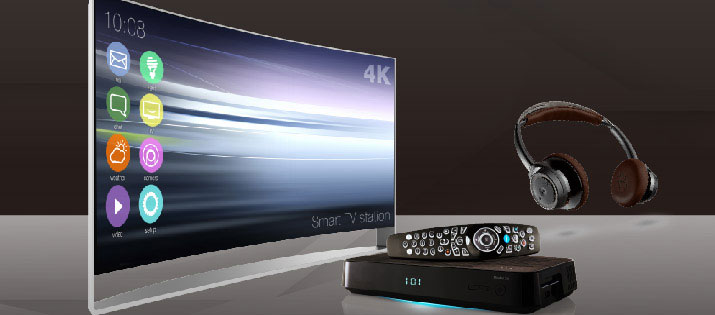
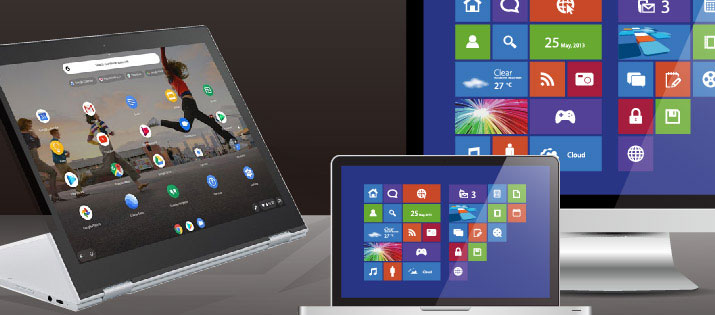
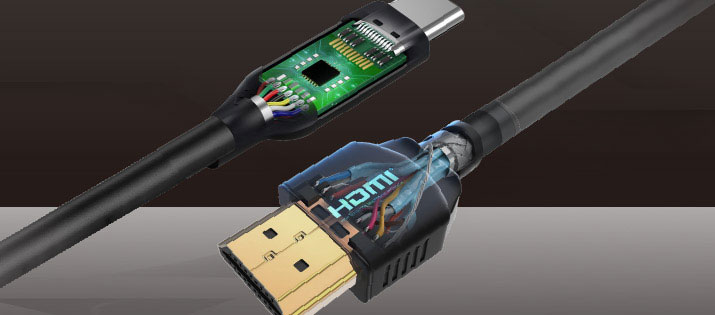
USB Power Delivery unifies the connection interface through USB Type-C, allowing a single cable to power everything from smartphones to high-performance laptops.
- Laptops & Monitors (Up to 240W)
- Tablets & Smartphones
- Power Adapters & Power Banks
- Docks & Hub Solutions

In March 2026, the USB-IF announced the Power Delivery Revision 3.2 Version 1.2.
Latest USB-IF Compliance Updates & EU Regulations
USB-IF Policy Transition Milestones:
-
Mandatory Certification Upgrade: USB PD 3.1 v1.8 certification officially sunsets in September 2026. Effective September 2026, transitioning to the USB PD 3.2 certification workflow is mandatory.
-
Latest Specifications & CTS:
Key Highlights of Commission Regulation (EU) 2025/2052:
Supersedes Directive/Regulation (EU) 2019/1782, with mandatory enforcement taking effect on December 14, 2028.
| Regulatory Focus | Requirements (EU 2025/2052) |
|---|---|
| Scope of Application | External Power Supplies (EPS), general portable battery chargers, wireless charging pads, and USB Type-C cables. |
| Common Charger Mandate | EPS must be designed as a Common Charger by default; captive/hard-wired Type-C cables are strictly prohibited. |
| Ports & Labeling | Must feature at least one USB-C / USB-PD port; enclosure must bear the official Common Charger logo; C-to-C cables must clearly indicate power ratings of 60W or 240W. |
| Performance & Robustness | EPS must satisfy energy efficiency and interoperability requirements; interoperable EPS units must remain fully operational following surge testing. |
PROVIDE LATEST CERTIFICATION: V3.2 R1.2
- Technical Standards : Represents the highest current technical standards and functional specifications available.
- Full Compliance : Covers all recent functional specs and mandatory compliance requirements for USB-IF.
- Immediate Availability : Applications are open. All new certification filings must follow this version.

European Union EU Conformity GUIDELINES


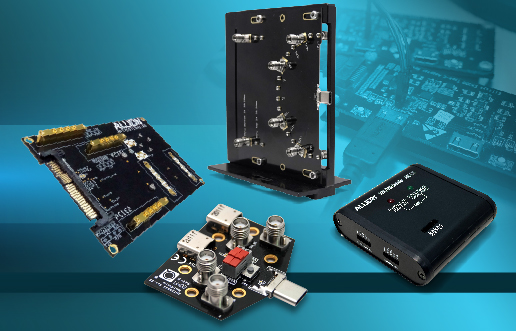
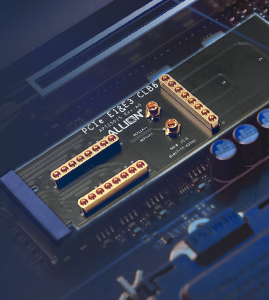
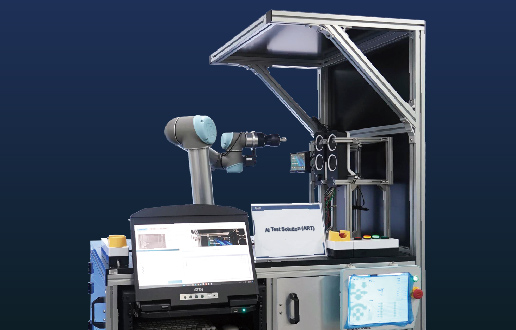
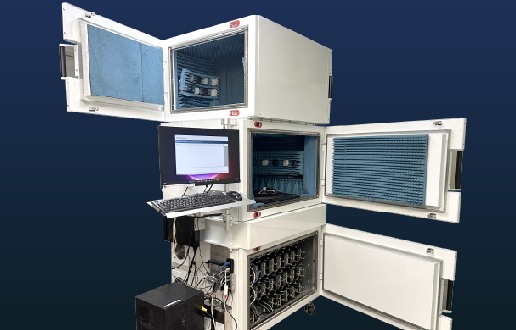
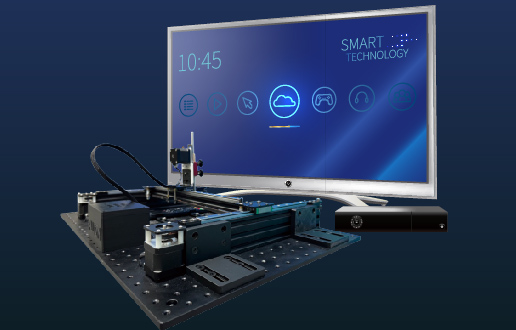
Allion Proprietary Automation: Tailored Test Platforms
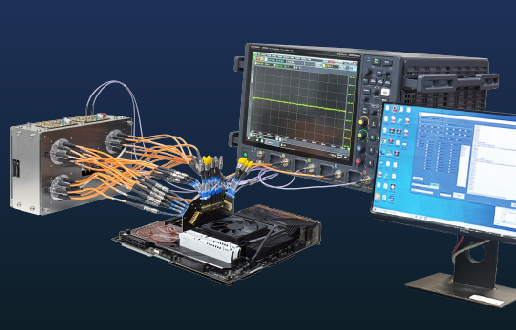
To eliminate human error and accelerate throughput, Allion deploys proprietary automated test platforms and customized fixtures. All USB PD products undergo rigorous validation and cross-verification using official, USB-IF-approved test instrumentation:
Officially Certified Dual-Vendor Test Instrumentation:
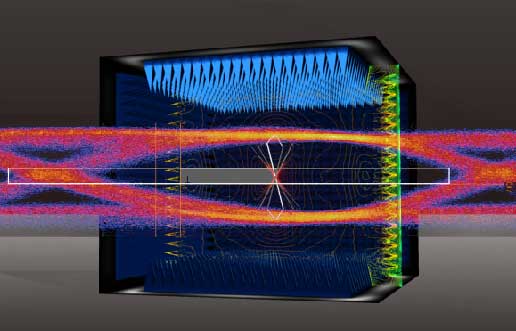
As escalating USB transmission data rates present mounting challenges to PCB and circuit design, signal integrity (SI) has become paramount. Early detection and remediation of SI issues are vital. Leveraging top-tier instrumentation—such as real-time oscilloscopes and vector network analyzers (VNAs)—alongside our proprietary fixtures and automated toolsets, Allion pinpoints latent signal degradation early in the design cycle, helping you resolve risks upfront and bypass time-consuming post-launch debugging.
-
GRL (GRL-USB-PD-C2-EPR): Full-suite test execution (supporting both SPR and EPR).
-
Teledyne LeCroy (Voyager M310e / M4x / M310p): Full-suite test execution (M310e supporting EPR).
-
Ellisys (USB Explorer® 350): Dedicated Protocol Section validation.

POWER GROWTH: 100W TO 240W+

Performance Comparison: Before vs. After Implementation
| Evaluation Dimension | Traditional Manual Operation | Allion Automation Solution Benefits |
|---|---|---|
| Testing Efficiency | Heavy manual switching and operation; prone to high error rates. | 80% process automation, maximizing human error reduction. |
| Debugging Cost | Repeated hardware board respins; time-consuming and expensive. | 80%–90% of issues directly fixable via firmware (FW). |
| Test Accuracy | Misconfigurations cause invalid re-tests. | 100% VIF accuracy validation, ensuring a high first-pass rate. |
The Allion Edge: Beyond PASS and FAIL
Why partner with Allion? We go beyond the “pass/fail” report to provide strategic value at every stage of your product lifecycle.

ALLION: PRECISION & COVERAGE

END-TO-END PRODUCT SUPPORT
Pre-compliance and protocol validation from day one.
Compatibility testing across real-world device ecosystems.
Comprehensive USB-IF guidance to clear every hurdle.
Root cause analysis and rapid regression verification.

FAQ
- Q: Why do USB PD products fail compliance testing or show test result anomalies?
- A: The root cause almost always traces back to the VIF (Vendor Info File). The VIF parameter matrix serves as the gold-standard baseline for test automation and specification compliance. Any parameter discrepancies will trigger false failures during testing; achieving 100% VIF accuracy is a mandatory prerequisite for passing certification.
- Q: Does a failed PD compliance test imply that a full hardware redesign is necessary?
- A: Typically, no. Historical test data indicates that 80% to 90% of Type-C and USB PD non-compliance issues can be resolved via firmware updates, dramatically reducing the costs and schedule risks associated with board respins.
- Q: For products rated above 100W using Extended Power Range (EPR), what are the primary testing focal points?
- A: The key focus lies in high-voltage transition safety and protection timing across 28V, 36V, and 48V levels. Testing rigorously verifies the protection handshakes when entering and exiting EPR mode. If any anomaly is detected—such as a cable capability mismatch—the system must trigger a Hard Block and immediately collapse the bus voltage to a safe 5V vSafe5V rail, preventing electrical arcing and device burnout risks.


