An Engineering Framework for Precision Control and Flight Reliability
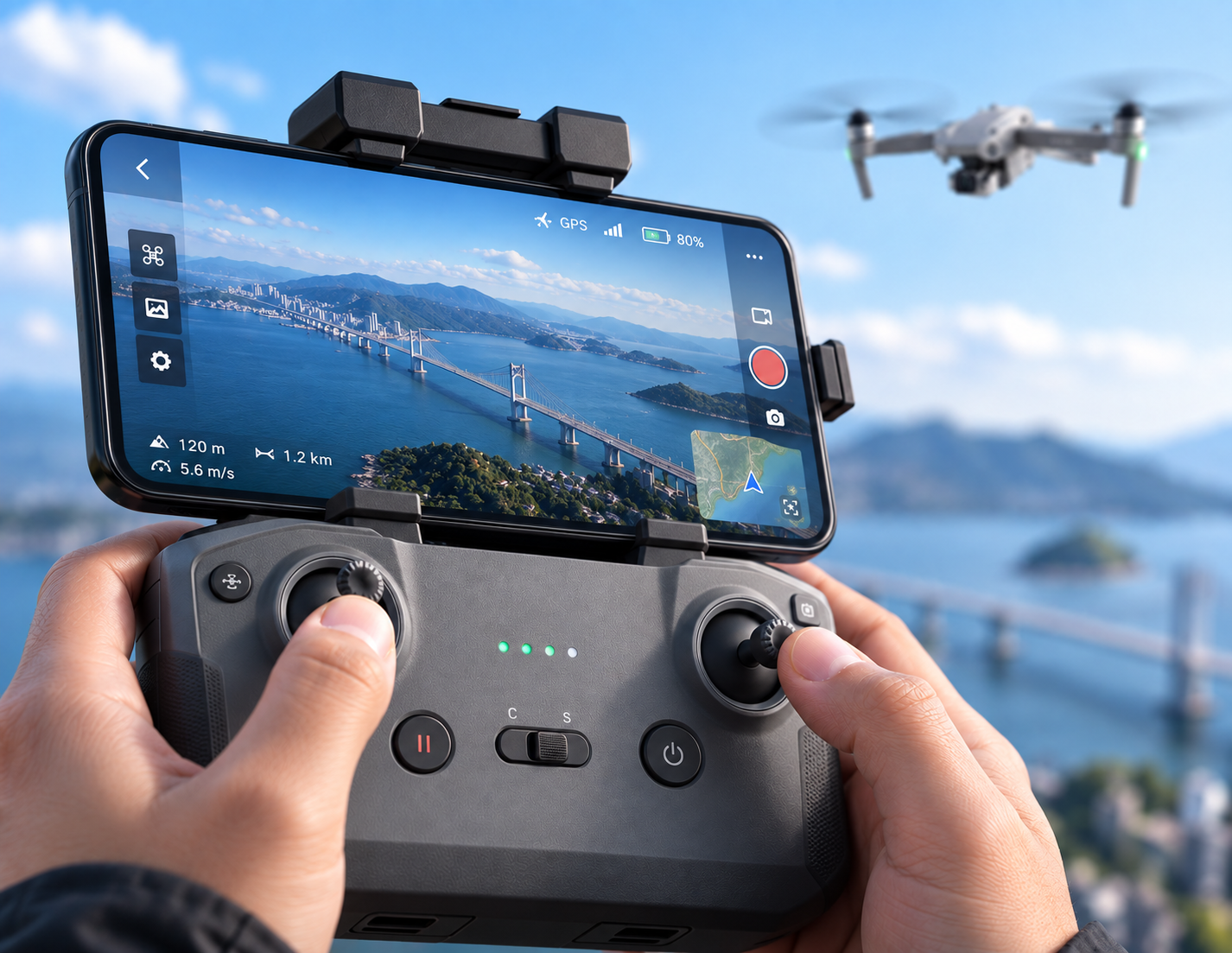
The drone joystick is the key input part that connects what the pilot wants to how the drone actually moves. A complete validation must cover eight dimensions – accuracy, crosstalk, path fidelity, rebound, latency, drift, durability, and wireless stability – not just whether the joystick physically works.
Allion combines an engineering-grade motion platform with its Golden Methodology to transform subjective control feel into quantifiable, traceable engineering data, enabling customers to accurately evaluate real-world joystick performance, identify potential risks, and pinpoint areas for improvement.
Why Does a Drone Joystick Need Its Own Validation?
A drone joystick may look like a game controller, but each axis – Throttle, Yaw, Pitch, and Roll – maps directly to a flight control parameter. A tiny error, a dead zone, or a sudden signal glitch can turn straight into an unexpected change in the aircraft’s attitude.
Hidden Failure Risk: If Every Joystick Passes Factory Testing, Why Do Problems Still Happen in Flight?
Standard production-line testing only checks whether a joystick works. It cannot catch the small, dynamic problems that only show up during real use. This is a major cause of returns and damaged brand reputation:
Micro-displacement failure: Small movements produce non-linear jumps, which hurt obstacle-avoidance accuracy and hover stability.
Masked data (false smoothness): Firmware can use “Axis Snap” to hide a hardware flaw, sacrificing the true accuracy of the flight path.
Rebound and jitter: Overshoot after a fast release, or noise at the center position, can make the aircraft drift on its own.
Environmental and long-term wear: Worn potentiometers or springs, plus temperature and humidity changes, often cause jerky throttle jumps after long-term use.
Wireless and interface bottlenecks: Interference can cause high latency or random disconnects, and USB devices may not be recognized consistently.
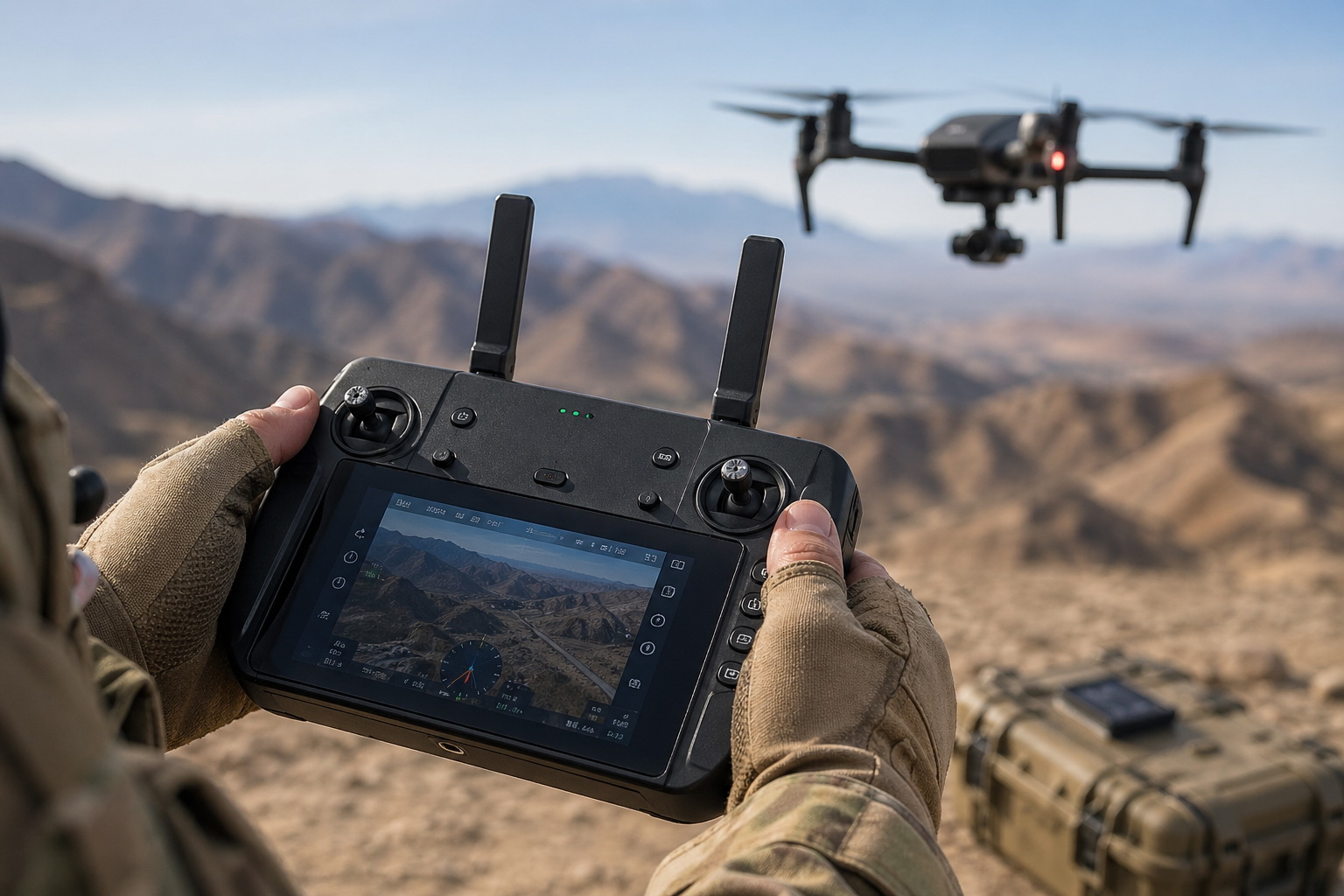
The joystick on a drone remote controller is the only physical link between what the pilot wants and how the aircraft responds.
The hardest part about these hidden failures: a joystick can pass every factory test and still fail under specific dynamic conditions. That is because standard testing only checks whether a function exists, not whether it stays stable under real, changing conditions.
Eight Quantified Validation Dimensions for Drone Joysticks
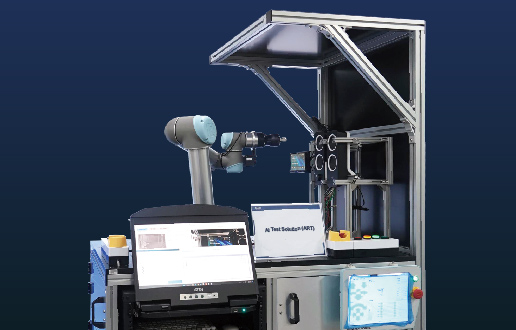
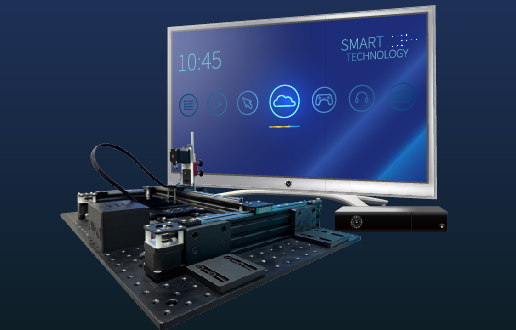
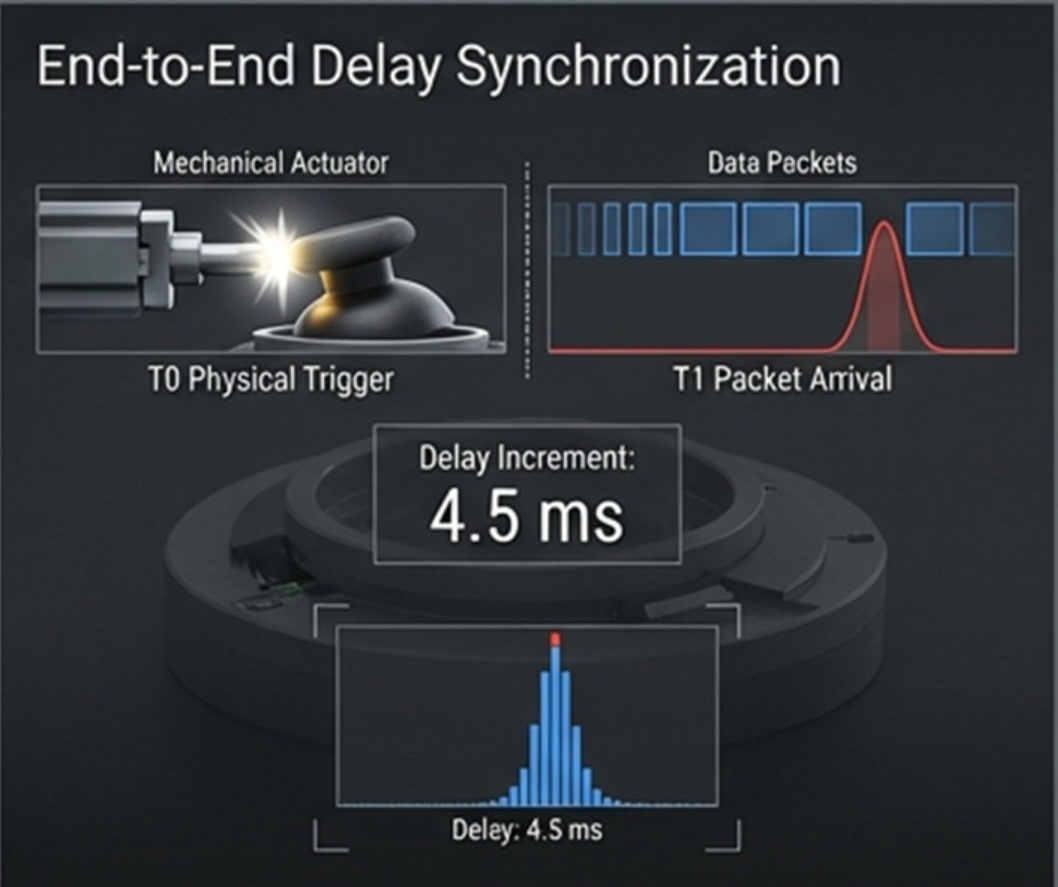
Allion breaks manual operation down into a programmable motion path. A precision motion platform repeats the exact same movement every time, while capturing the physical trigger (T0) and the signal arrival (T1) together, so any anomaly can be reproduced and compared under identical conditions.
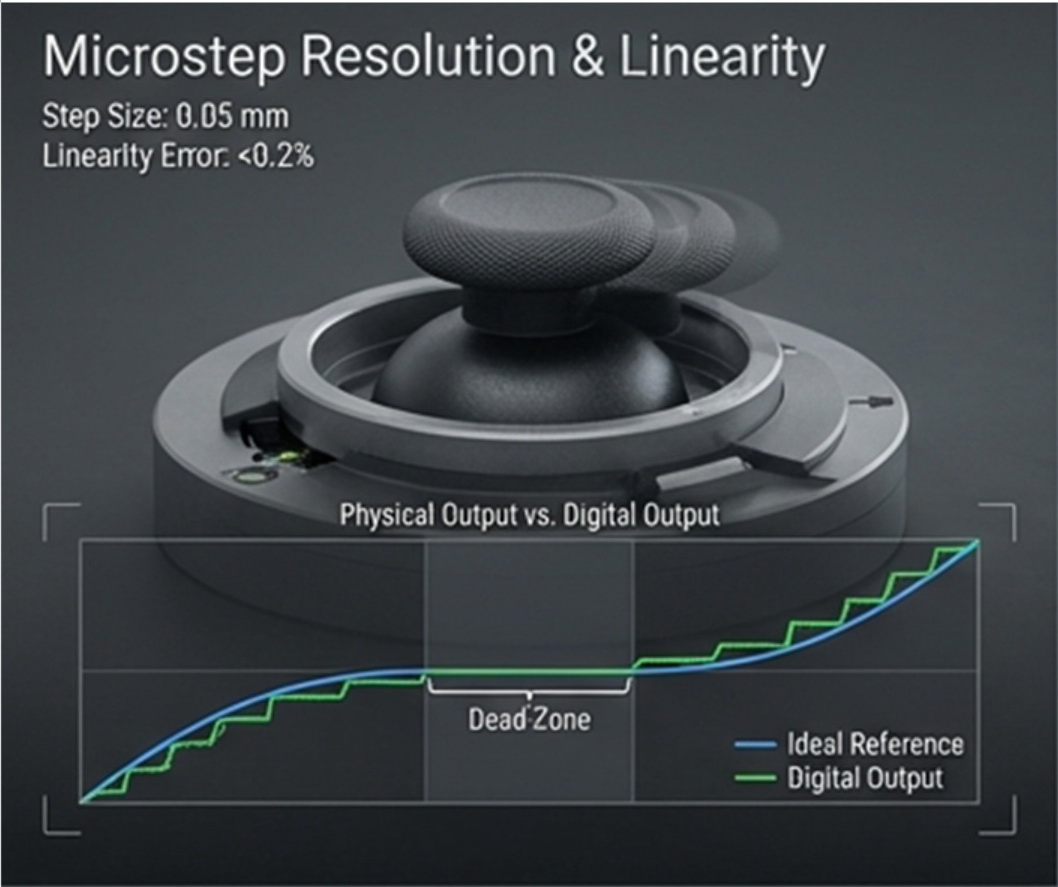
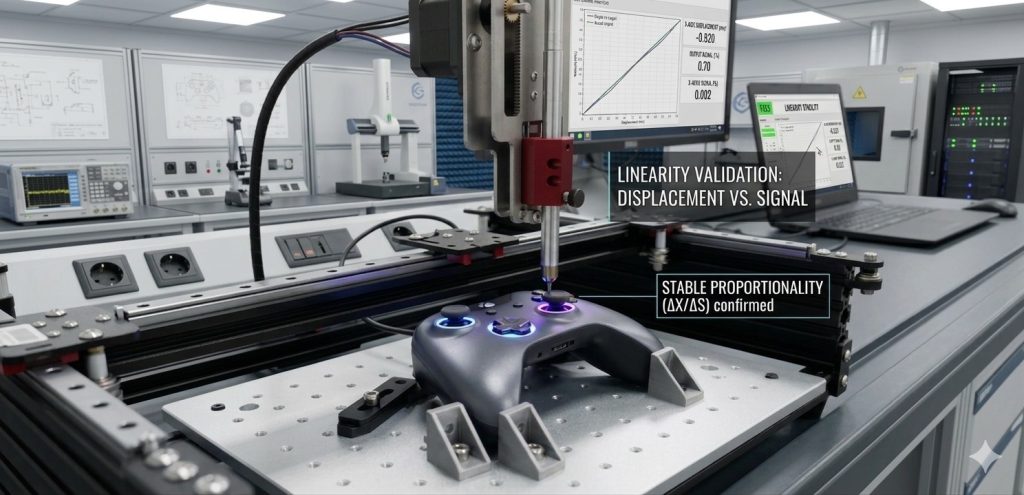
Measures 0.05mm micro-step displacement against the digital output curve, and checks the width of the Dead Zone.
Why It Matters for Flight Control
Removes the jagged feeling when fine-tuning heading or camera angle, so acceleration stays smooth.
Example Engineering Benchmark
Linearity error < 0.2%
Dead zone travel < 0.5mm
*The values above are example engineering benchmarks. Actual pass/fail thresholds are customized to fit each product and customer’s needs.
0.05mm micro-step displacement vs. digital output, including Dead Zone measurement
Axis Crosstalk
What Is Tested
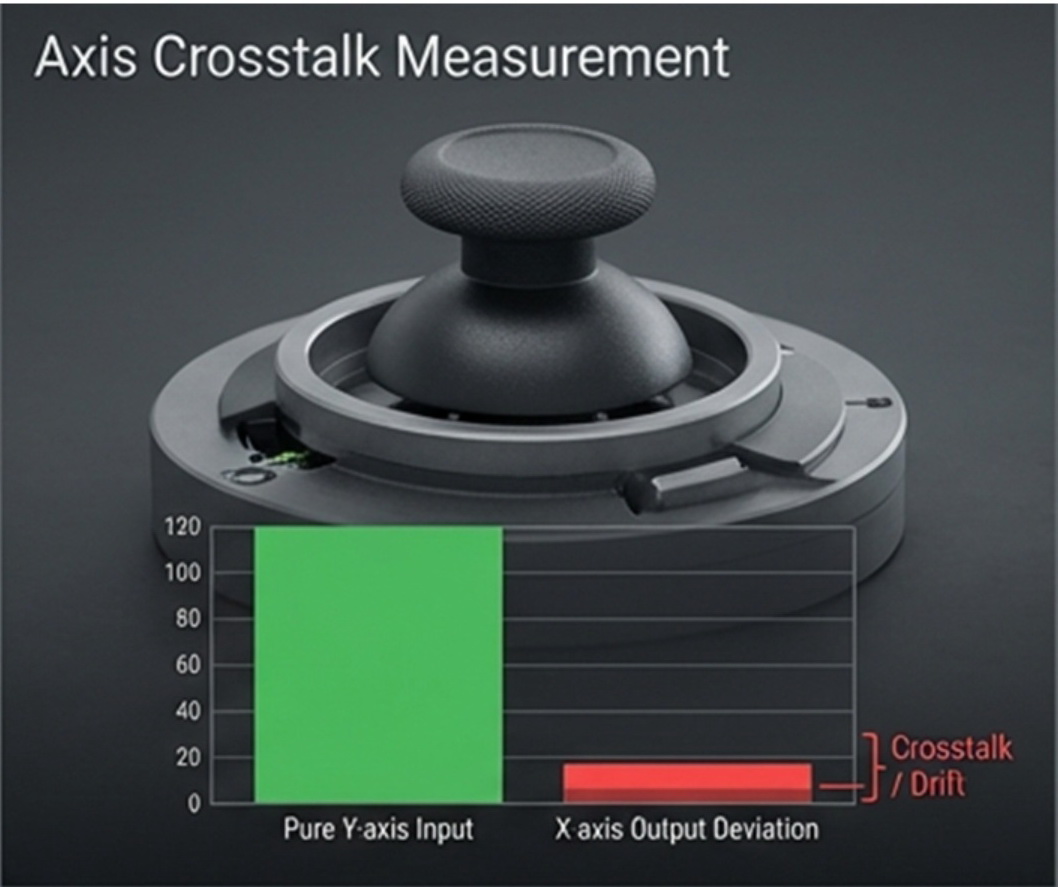
Pushes only one axis and measures any unexpected output on the other axis.
Why It Matters for Flight Control
Prevents the hardware flaw where the pilot pushes forward but the aircraft also yaws slightly.
Example Engineering Benchmark
Single-axis output deviation < 3%
*The values above are example engineering benchmarks. Actual pass/fail thresholds are customized to fit each product and customer’s needs.
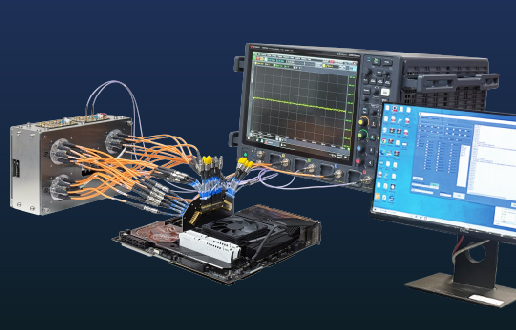
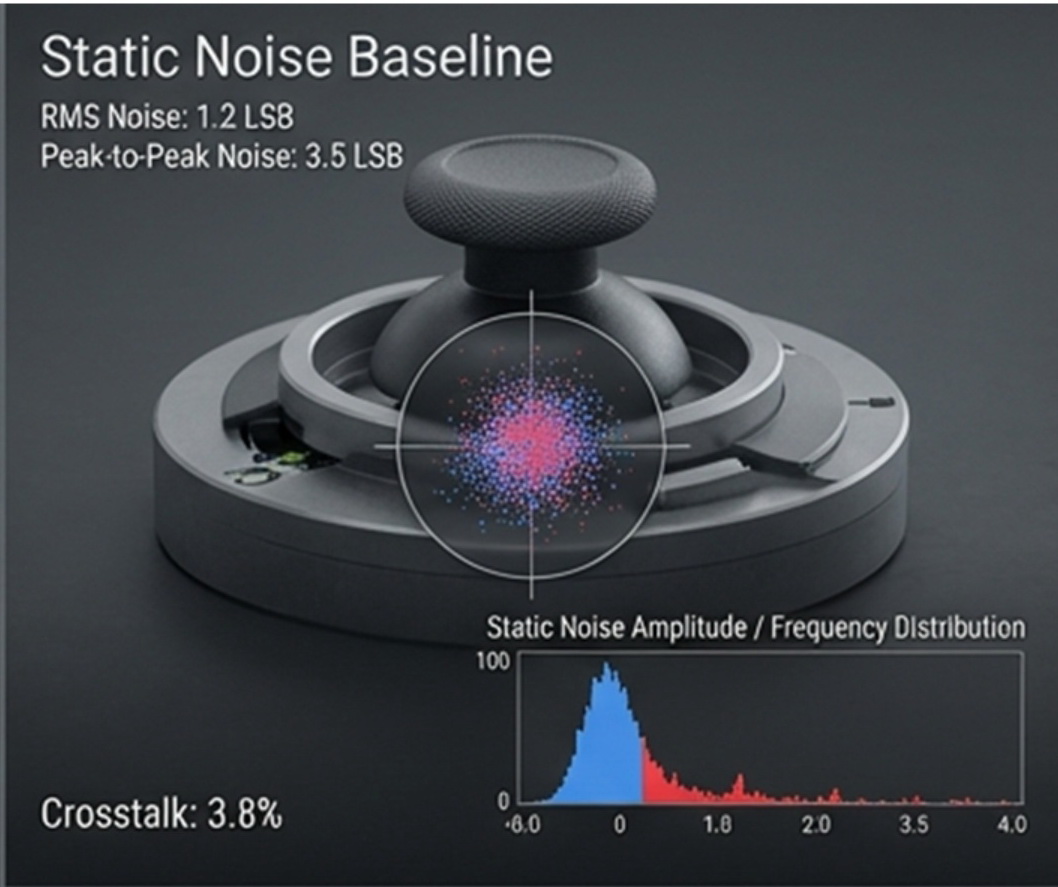
Unexpected output on one axis while pushing only the other - quantifies cross-axis interference
Path Fidelity
What Is Tested
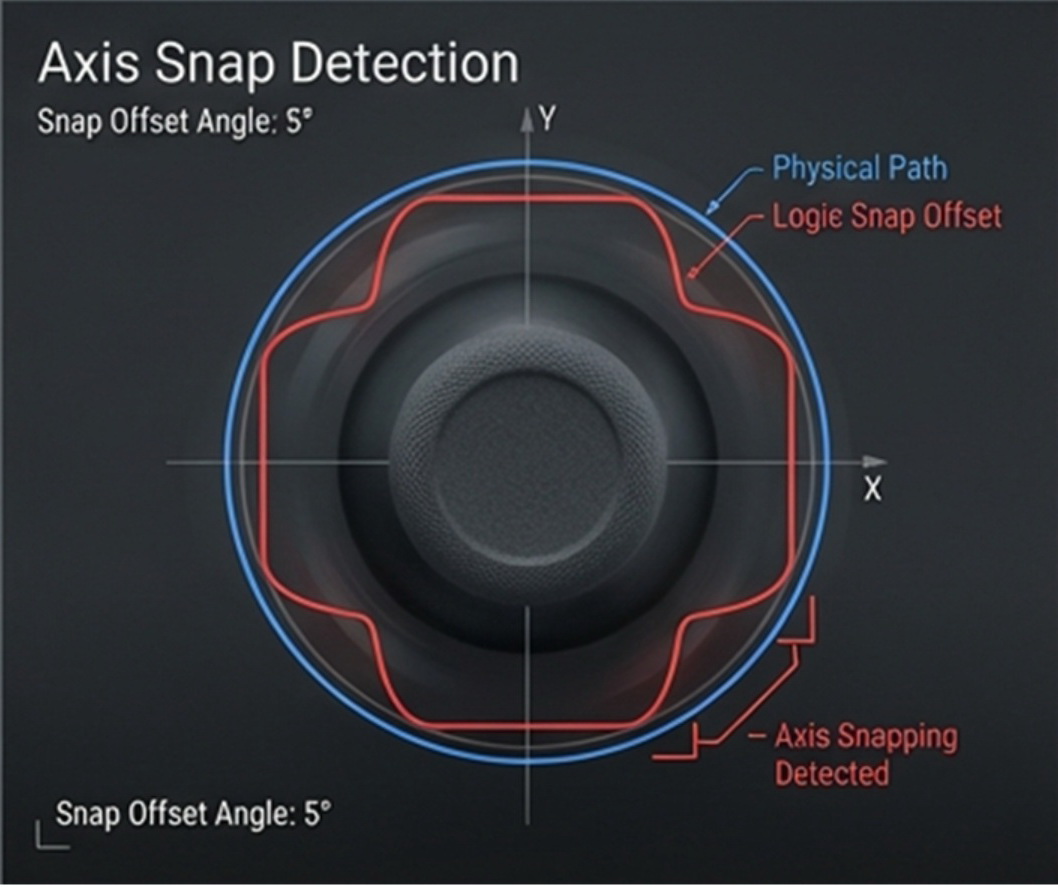
Compares the physical stick path to the logical output to quantify the Axis Snap offset angle.
Why It Matters for Flight Control
Reveals cases where firmware smoothing hides a hardware flaw, and restores the true control path.
Example Engineering Benchmark
Axis Snap offset angle < 5°
*The values above are example engineering benchmarks. Actual pass/fail thresholds are customized to fit each product and customer’s needs.
Compares the physical path to the logical output to quantify the Axis Snap offset angle
Rebound Stability & Center Return
What Is Tested
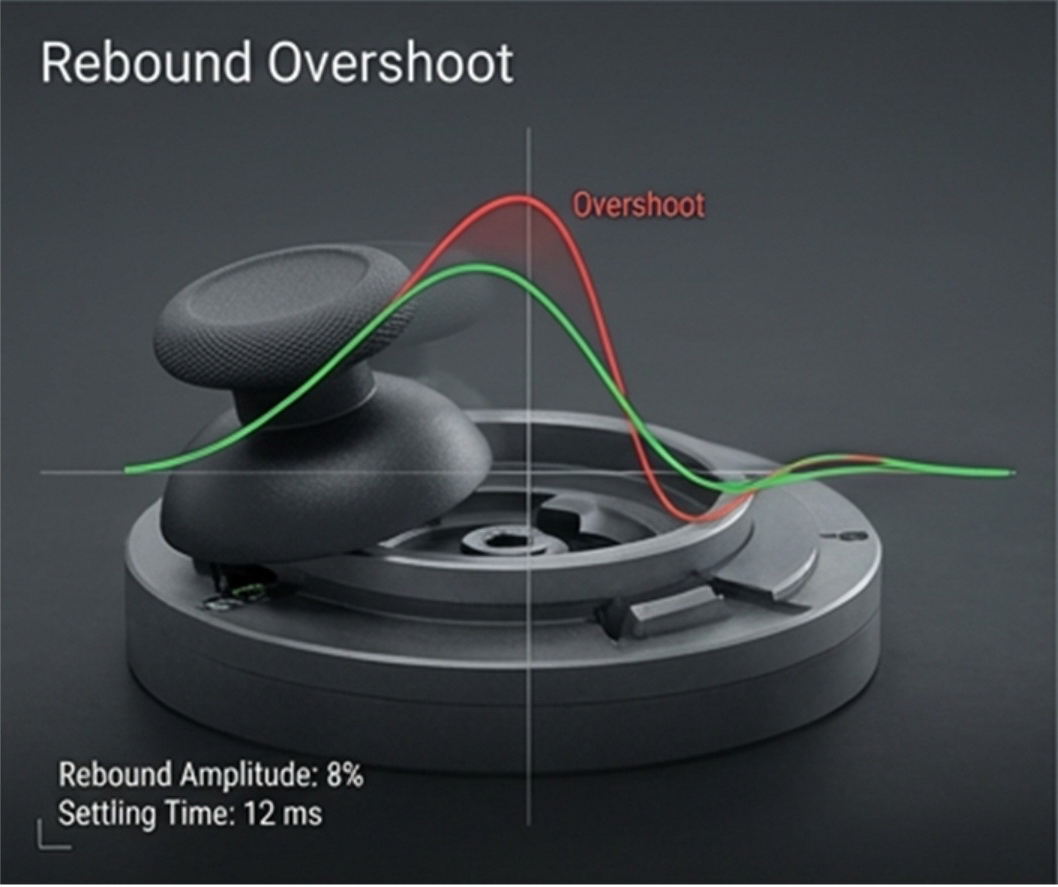
Records the amplitude and settling time after a fast release, and captures peak-to-peak noise at the center position.
Why It Matters for Flight Control
Prevents a sudden attitude jump right when the stick is released, so the camera or gimbal settles back immediately.
Example Engineering Benchmark
Rebound overshoot < 8%
Settling time < 12ms
*The values above are example engineering benchmarks. Actual pass/fail thresholds are customized to fit each product and customer’s needs.
Measures overshoot and settling time after a fast release
End-to-End Latency
What Is Tested
Compares the physical trigger (T0) to signal arrival (T1) to calculate delay and jitter in milliseconds.
Why It Matters for Flight Control
Turns the feeling that controls are laggy into a hard number, keeping the command and the aircraft’s response in sync.
Example Engineering Benchmark
Average latency < 10ms
Latency jitter < 1ms
*The values above are example engineering benchmarks. Actual pass/fail thresholds are customized to fit each product and customer’s needs.
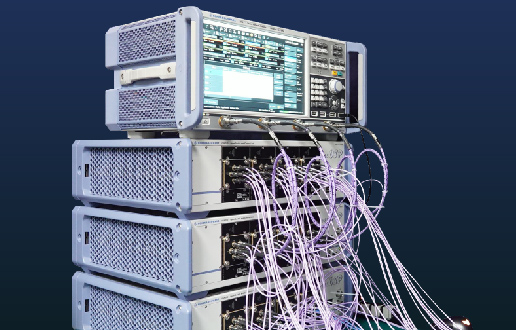
Captures the physical trigger (T0) and signal arrival (T1) together to calculate end-to-end delay
Joystick Drift
What Is Tested
Sets a baseline on a new unit, then compares the center point and axis output after repeated use, environmental stress, and aging tests.
Why It Matters for Flight Control
Prevents the long-term risk of a unit that passes acceptance testing new, but later drifts on its own when no one is touching it.
Example Engineering Benchmark
Compared against the new-unit baseline
(customized per product)
*The values above are example engineering benchmarks. Actual pass/fail thresholds are customized to fit each product and customer’s needs.
Tracks peak-to-peak noise and offset at the center position to reveal long-term drift risk
Mechanical Durability
What Is Tested
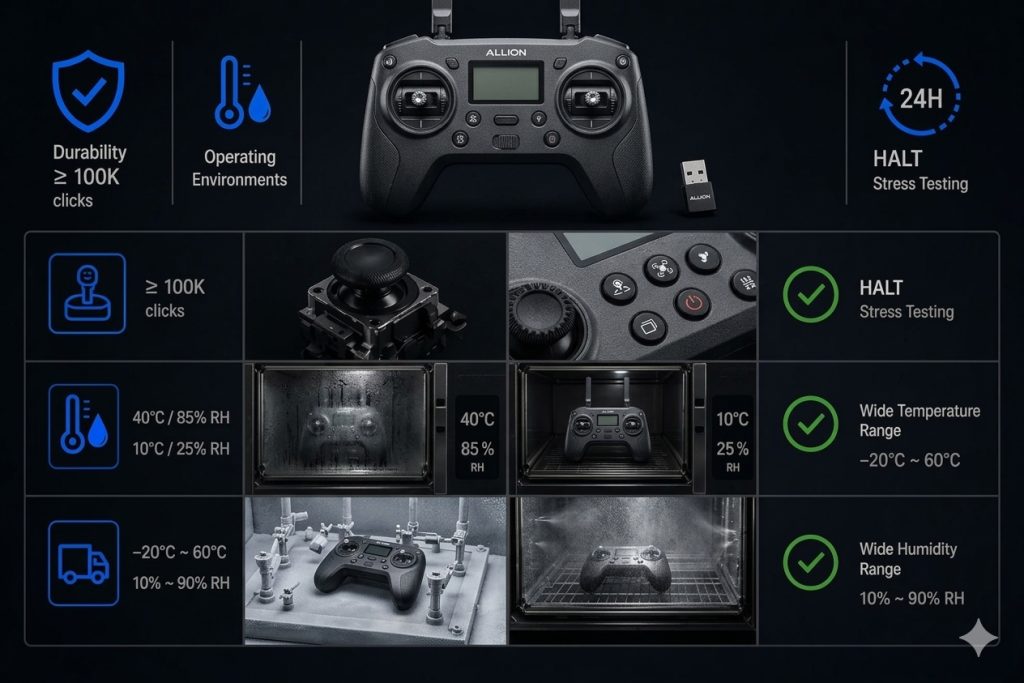
Runs on the order of 100,000 button presses and stick cycles, and simulates high/low temperature and humidity, vibration, shock, and HALT accelerated stress.
Why It Matters for Flight Control
Lowers the after-sales failure rate and keeps control stable and reliable during long, demanding flight missions.
Example Engineering Benchmark
≥ 100K press/rotation cycles
-20°C to 60°C storage/shipping stress
*The values above are example engineering benchmarks. Actual pass/fail thresholds are customized to fit each product and customer’s needs.
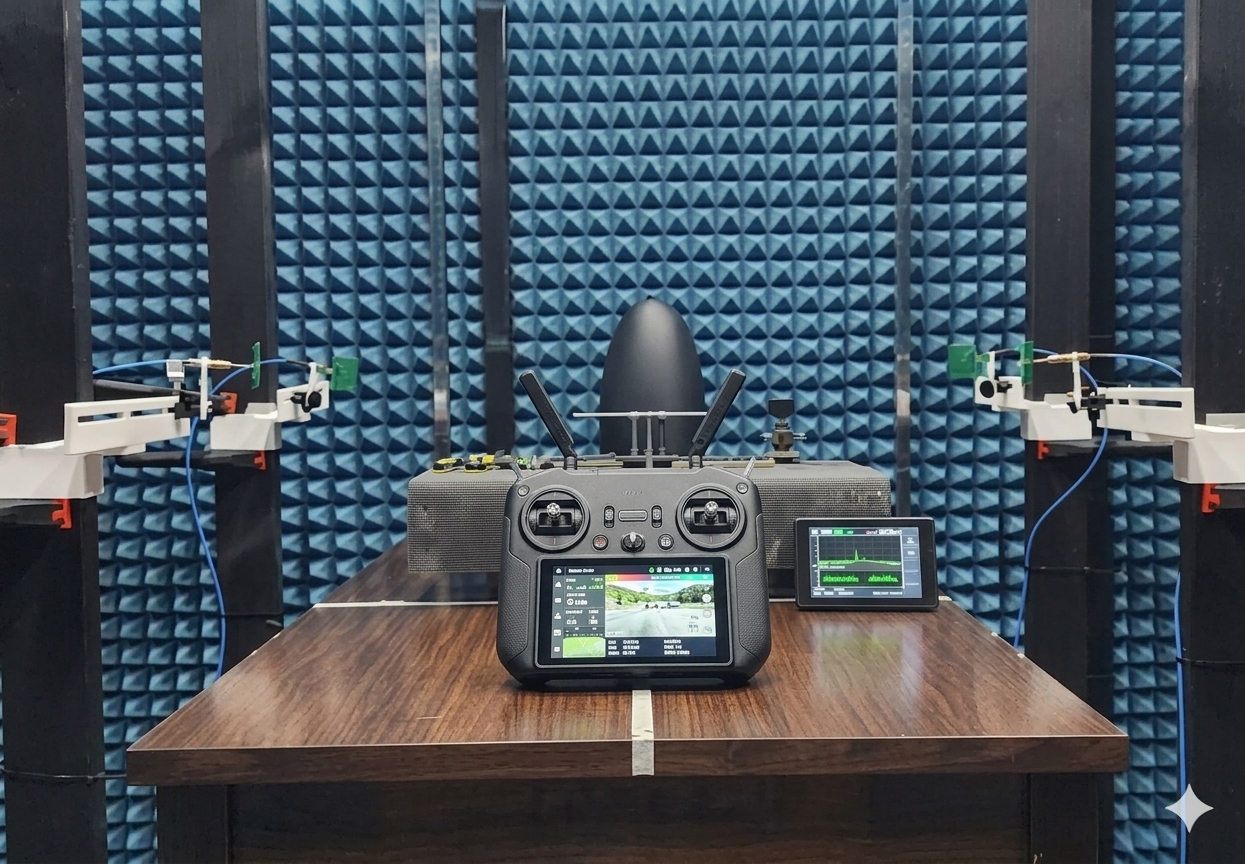
Tests connection setup time, plus packet loss and reconnection behavior under Wi-Fi/Bluetooth/LTE interference.
Why It Matters for Flight Control
Keeps control stable even in complex RF environments – race events, urban airspace, or multi-drone light shows with heavy coordinated communication.
Example Engineering Benchmark
Frame drop rate < 0.1%
Frame drop rate under RF coexistence < 0.5%
*The values above are example engineering benchmarks. Actual pass/fail thresholds are customized to fit each product and customer’s needs.
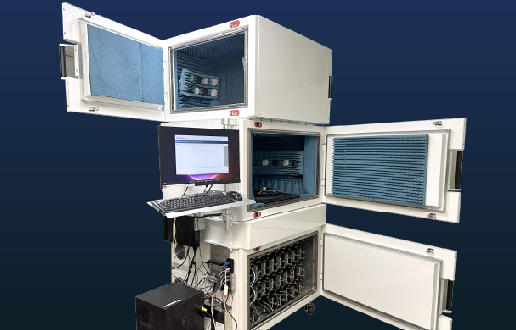
Wireless Reliability & Coexistence - tested inside an RF chamber to check connection stability under Wi-Fi/Bluetooth/LTE interference.
Enterprise, industrial, and defense-grade drone systems usually need tighter pass/fail limits across these eight dimensions – especially higher accuracy and stability requirements for Wireless Reliability, Mechanical Durability, and Latency/Path Fidelity.
Why Choose Third-Party Validation: Service Tiers and When to Start
Quality problems in drone controllers often span several technical fields at once. Third-party validation translates subjective user feelings into objective, quantifiable engineering data. Allion offers four consulting tiers, from a quick first step to a deep, long-term partnership. We recommend starting as early as the Product Definition or Pre-R&D stage, so design problems are caught early instead of costing more to fix later.
A dedicated consulting team, lab resources, and pre-R&D technical evaluation. Best for companies seeking a long-term partner.
Faster, Easier, Better:Allion’s Advantages
Allion Labs brings over 30 years of testing and consulting experience. Our third-party “Allion Qualified” mark lets a brand back up its performance claims with objective data instead of just its own word. The value of this service comes down to three promises:
Faster
A proposal within three days, with fast analysis, planning, and validation of the key factors.
easier
An expert team with decades of experience helps you find direction when a problem feels unclear.
better
A complete plan to improve performance and user experience, raising quality and customer satisfaction.
Beyond the eight core dimensions, we also test performance under extreme temperature, humidity, vibration, and shock, plus how well the radio link holds up under heavy interference, so control stays precise and predictable even on high-risk missions.
We set a baseline for the center point and axis output on a new unit, then re-measure after repeated use, durability testing, or environmental stress, and compare the offset and input stability.
Because the lag comes from the whole chain – joystick input, signal processing, wireless transmission, and the receiver – not just the joystick. That is why End-to-End Latency, measured from the physical trigger (T0) to signal arrival (T1), is the more useful number.
Because standard factory testing only checks that a function exists. It cannot catch small dynamic problems like Axis Snap or rebound overshoot. That is exactly why dynamic testing on an engineered motion platform is needed.
Controllers often operate alongside Wi-Fi, Bluetooth, and other devices in a busy RF environment. The real question is not just whether it can connect, but how the control input behaves when signal quality drops.
Third-party validation produces results that are objective, repeatable, and measurable. It turns a vague feeling like “the joystick feels off” into engineering evidence your team can actually measure and act on.
We can sign an NDA as needed. Testing takes place in a dedicated lab, and data is shared only with authorized parties, which suits companies and defense projects with strict security and IP requirements.
Fill it in and talk to our most experienced experts Leave your details and ask us anything!
Allion uses cookies and shares data with Google Ads and LinkedIn for analytics and ads. Data is retained up to 6 months. See our Privacy Policy for details. Do you consent?AcceptDecline