






























As CPE devices integrate multiple wireless technologies such as LTE, Wi-Fi, and GNSS, coexistence interference between radios operating at the same time can become a critical factor in positioning performance. Even when GNSS works normally on its own, interference from the LTE transmitter can cause significant position errors once the device is connected to the network and running under heavy load.
Based on hands-on testing of a real CPE device, this article shows how LTE–GNSS coexistence interference affects positioning accuracy and explores possible ways to mitigate it.
1. DUT Overview and Key Findings
The device under test (DUT) was a CPE device for a Japanese telecom operator. With 2.4 GHz Wi-Fi enabled and an active LTE Band 3 connection, the test replicated the heavy-load coexistence conditions the device faces in real-world deployment. Two key issues were identified:
- GNSS receiver desensitization caused by spurious emissions from the LTE Band 3 transmitter:
With the LTE connection active at C/N₀ 40 dB-Hz, the location accuracy rate (share of fixes within ±3 m) plummeted from 90% to 0–10%, and the mean position error grew to 23.3–25.8 m. - Combined impact of device orientation and LTE interference:
Across different signal levels and orientations, LTE desense severely degraded positioning accuracy but had only a limited effect on TTFF (34–44 s cold start) and reacquisition time (2.36–3.3 s). Tilting the device steers the main beam of the GNSS antenna away from zenith, reducing effective receive gain, and may also shorten the coupling distance to the LTE antenna, making desensitization worse.
2. Test Equipment and Setup
| Setup Item | Equipment / Environment | Configuration and Purpose |
|---|---|---|
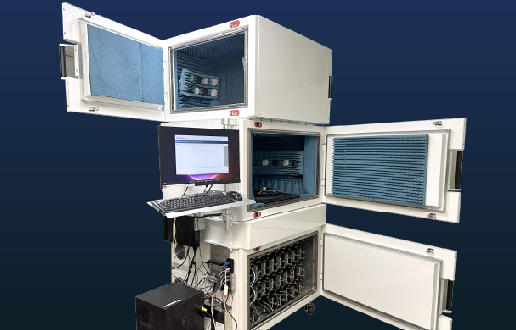
| Test environment | RF shielded room / anechoic chamber (Chamber 333) | Isolates external noise to ensure accurate, repeatable carrier-to-noise measurements (22°C / 50% RH) |
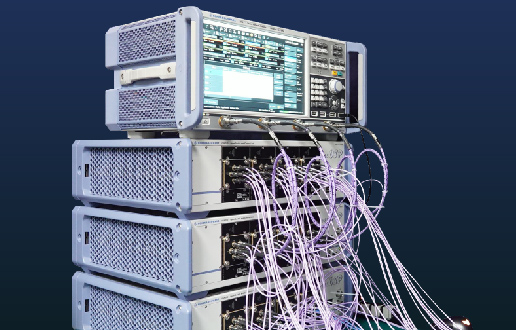
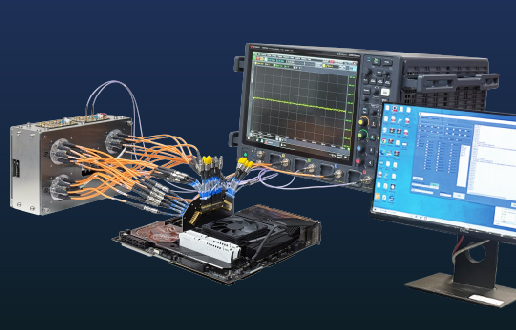
| GNSS signal simulator | R&S SMBV100B with measurement antenna (1 m distance) | Simultaneously generates GPS L1, Galileo E1, and BDS B1 signals with controllable C/N₀ (40 and 30 dB-Hz) |
| Wireless communication tester | R&S CMW500 4G/LTE wideband radio communication tester | Establishes an LTE Band 3 connection, holding RSRP at −80 to −90 dBm and RSRQ at −10 to −15 dB for a stable link |
| Mini PC | UP Squared Pro 7000 Edge | Runs 2.4 GHz Wi-Fi (Ch 1) with bidirectional data throughput to simulate real-world, full-load operation |
| Device under test (DUT) | CPE for a Japanese telecom operator | Production unit with built-in GNSS module and antenna |
3. Test Results and Analysis
Test conditions:
TTFF, reacquisition time, location accuracy rate, and location precision rate were measured under four combinations of test conditions.
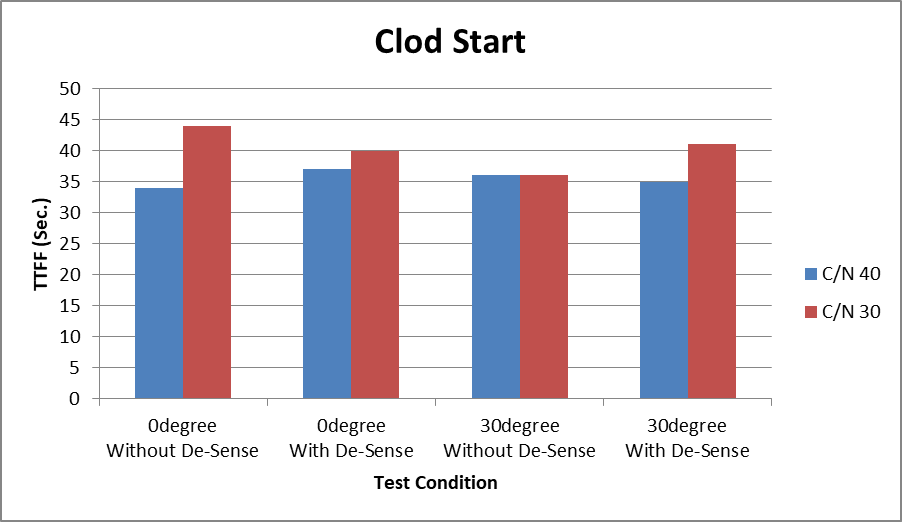
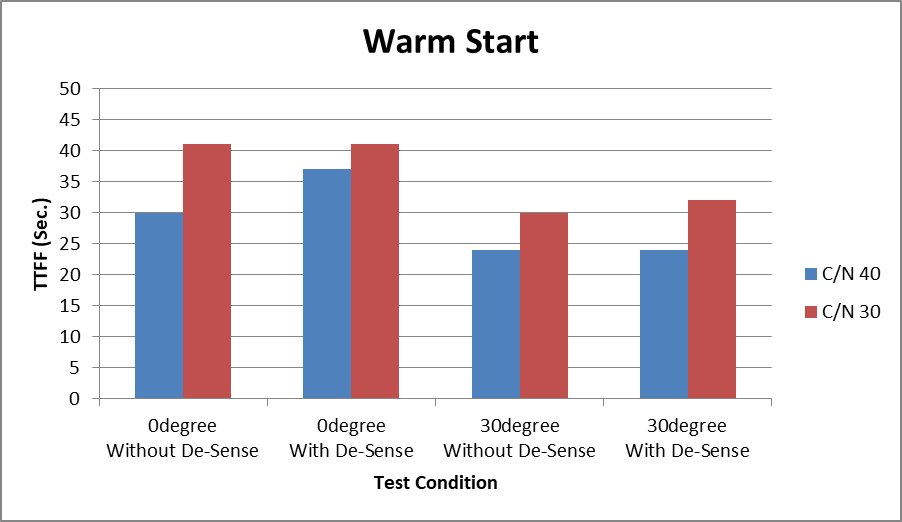
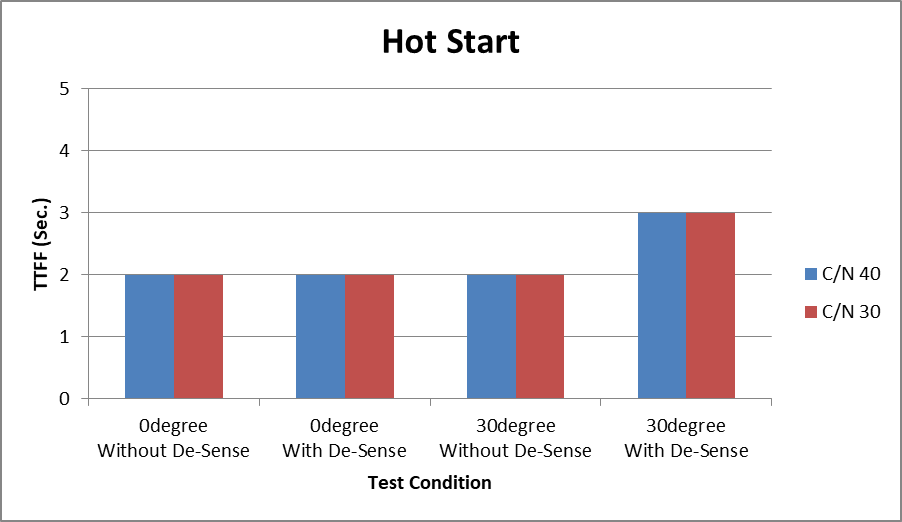
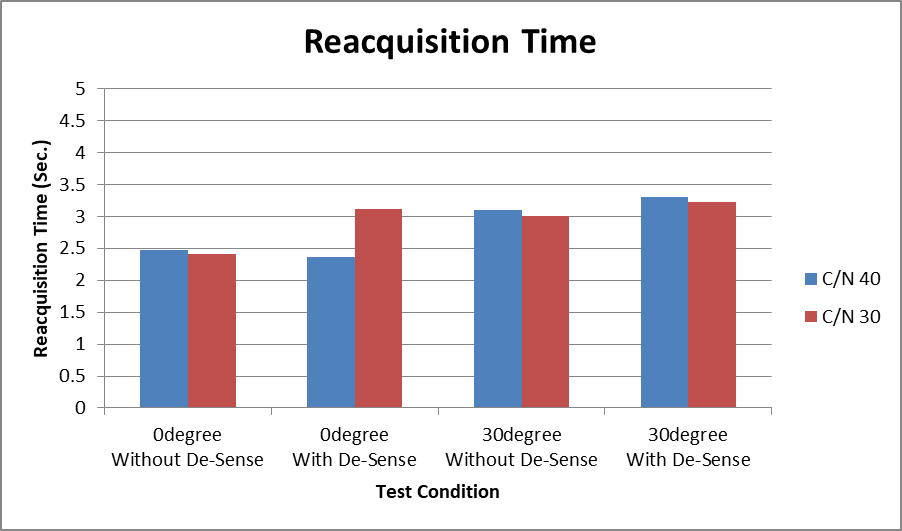
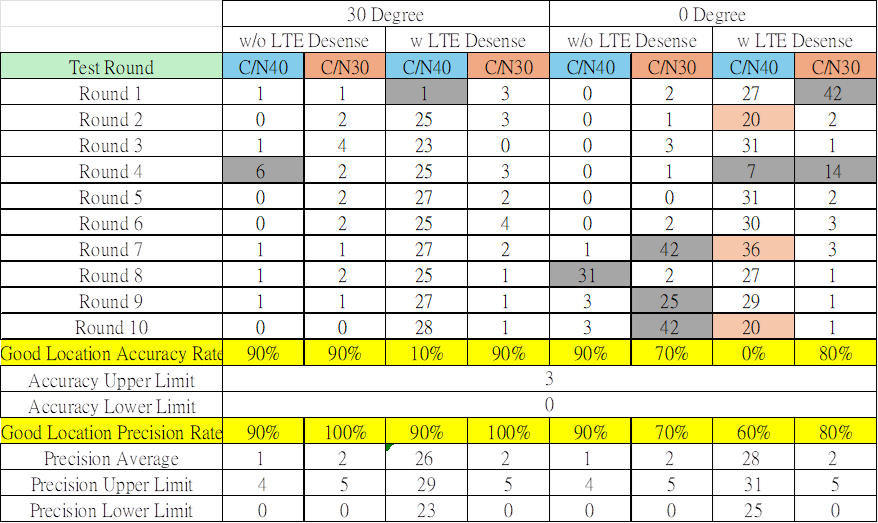
Table 1. Summary of Latitude/Longitude Error Measurements
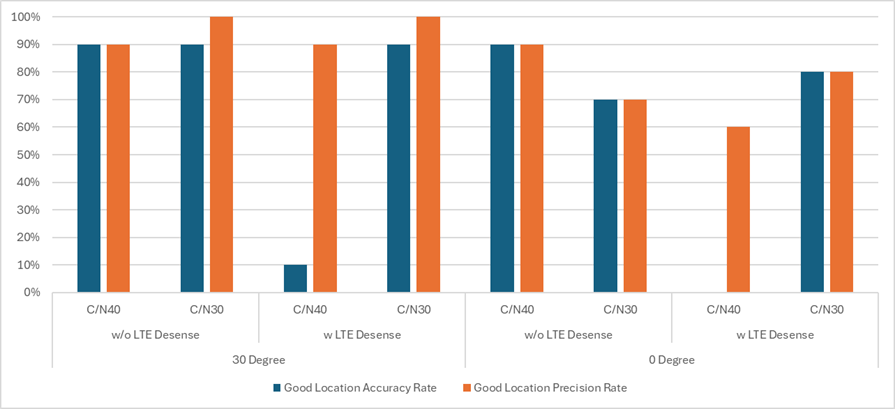
Table 2. Location Accuracy Rate vs. Location Precision Rate
TTFF and reacquisition time:
LTE Band 3 connectivity and device orientation had very little effect on time to first fix (34–44 s cold start, 24–41 s warm start, 2–3 s hot start) or on recovery after signal loss (2.36–3.3 s), with no noticeable delay from the user’s perspective.
Location accuracy rate and location precision rate:
Table 1 records the distance error (in meters) between the DUT’s reported position and the reference coordinates over 10 runs; ideally, this value should be as close to 0 m as possible. Under Allion’s test criteria, the acceptable absolute error is 3 m or less, so the passing range for the location accuracy rate is set at 0–3 m, and the rate is the percentage of runs that fall within it.
The location precision rate, by contrast, measures how stable and tightly clustered the fixes are. It is calculated by first excluding outliers (shaded gray in the table), computing the mean for each condition, and then counting the percentage of fixes that fall within ±3 m of that mean.
Table 2 shows that the location precision rate generally remained high. With LTE interference present, however, the location accuracy rate (blue bars) at C/N₀ 40 dB-Hz degraded severely or dropped to zero at both 30° and 0° (to 10% at 30° and 0% at 0°), indicating that LTE noise has a major impact on absolute positioning performance even under high C/N₀ conditions. The location precision rate, on the other hand, held at 80–100% in most conditions under LTE interference, dropping noticeably (from 90% to 60%) only in the most demanding case: a 0° orientation at C/N₀ 40 dB-Hz.
Allion’s Recommendations
1. Hardware filtering:
Add a SAW/BAW bandpass filter with high out-of-band rejection between the GNSS antenna and the low-noise amplifier (LNA) to block spurious emissions from the LTE Band 3 transmitter.
2. SBAS-aided correction:
In borderline conditions where C/N₀ is still high enough to maintain tracking, SBAS correction signals can reduce position offset. However, if desense pushes C/N₀ below the tracking threshold, SBAS corrections will have no effect, so hardware filtering should be the first priority to fix the root cause.
3. Hybrid network-assisted positioning:
Combine cellular (WWAN) assisted GNSS (A-GNSS) with Wi-Fi positioning in a hybrid algorithm to provide reliable position correction in environments with coexistence interference.
4. Orientation-aware design:
Tilting the device steers the main beam of the GNSS antenna away from zenith and reduces effective receive gain; if tilting also shortens the spatial coupling path between the LTE and GNSS antennas, desensitization becomes even worse. We recommend that the mechanical design team run antenna isolation simulations as early as the industrial design (ID) stage and specify the recommended mounting orientation in the product user manual.
4. Summary and Key Improvement Metrics
This test confirms that while the CPE’s GNSS positioning works normally on its own, enabling the LTE Band 3 connection causes significant receiver desensitization due to spurious emissions from the transmitter: the location accuracy rate plummeted from 90% to 0–10%, and the mean error grew to 23–26 m. TTFF and reacquisition time were largely unaffected, indicating that the interference does not prevent satellite acquisition but instead continuously raises the noise floor, pulling the position solution off target.
Coexistence issues like this cannot be detected through standalone GNSS testing; they can only be reproduced under real operating conditions with multiple radios running at once.
| Key Metric | Measured Result | Quality Implication |
|---|---|---|
| Impact of LTE desense on location accuracy rate | 90% → 0–10% (C/N₀ 40 dB-Hz) |
LTE coexistence is the top GNSS positioning risk for CPE devices and must be covered in pre-launch testing |
| Increase in mean position error | ≤ 3 m → 23–26 m | The error exceeds most operators’ internal requirements (3–10 m), making the device unfit for precise location services |
| Impact of interference on TTFF | Cold start 34–44 s Spread ≤ 10 s |
Satellite acquisition remained intact, with no impact on the user’s startup experience |
| Precision vs. accuracy gap | Precision 60–90% vs. Accuracy 0–10% |
The error is a systematic offset rather than random scatter, pointing to a hardware coupling path as the root cause, which filtering can fix |
| Additional impact of orientation | Accuracy rate slightly better at 30° than at 0° | The antenna radiation pattern interacts with the LTE coupling path, so mechanical design must account for mounting orientation |