























What is Thread?
Thread is a mesh network protocol designed for low-latency and low-power devices such as sensors. This technology does not use Wi-Fi or the home Internet, but rather a dedicated network system to connect home devices, providing a simple, secure, reliable and affordable means for people to connect their devices. Such devices do not require constant attention, are seldom used except when necessary, and only send simple information before switching back to sleep mode. Since they are not intended for constant use, their batteries tend to be preserved for as long as possible. Home devices such as sensors, door locks, window shades, light bulbs, thermostats, and alarms fall into this category. Moreover, Thread networks are highly expandable, supporting over 250 devices simultaneously.
Thread devices in smart homes serve primarily as routers or terminal devices. A router is usually an external device, such as a light bulb or a smart plug, which can be plugged into a power source and communicate with terminal devices. A terminal device, on the other hand, is typically a battery-powered device, like a sensor or a door lock, which can maintain its charge for a long time. Since the Thread network has a self-healing mechanism, if any router in the network fails for any reason, another router can immediately take over and continue its work, ensuring that the network always stays up. Thread devices communicate directly with each other via point-to-point communication and do not need to be connected through a main control device to find the optimal path for connection – a design approach that directly reduces power consumption, latency, and collisions of connections.
Below is a brief diagram illustrating how Thread devices interact with each other.
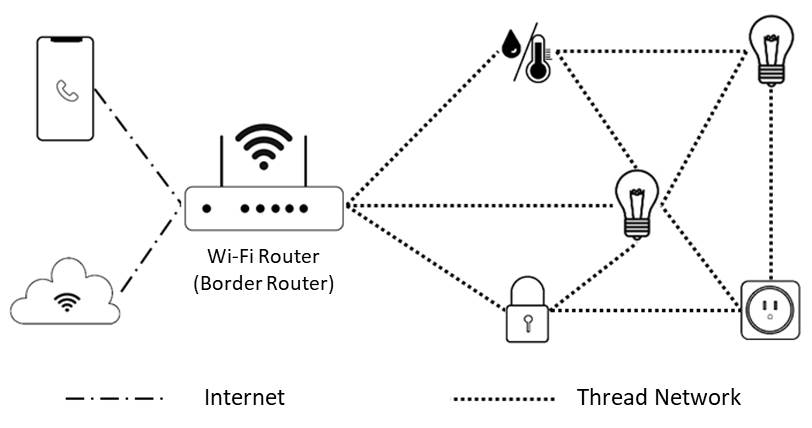
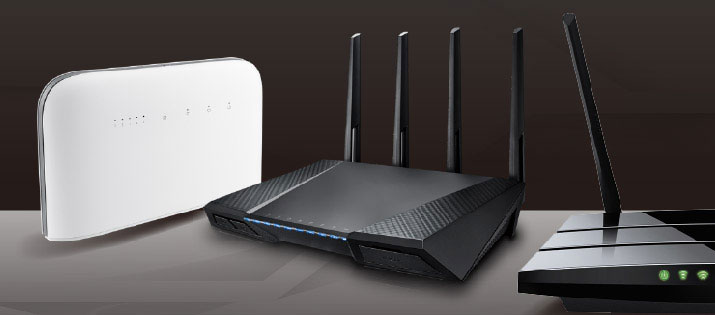
A major feature of the Thread network is the Thread Border Router. While Thread can operate independently and terminal devices can communicate directly with each other, you will need at least one Thread border router in order to connect Thread to the Internet. Therefore, even if you are away from home, you can control the smart home devices through a network connection. As an example, Amazon Echo smart speakers (4th generation), Apple TV 4K (2nd generation), and HomePod Mini all support Thread border routers.
There are currently several products on the market that support Thread technology:
- Smart door locks
- Wi-Fi routers
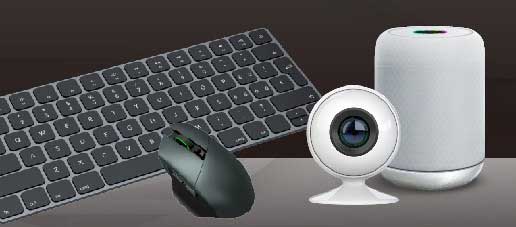
- Smart speakers
- Smart light bulbs
- Smart sensors
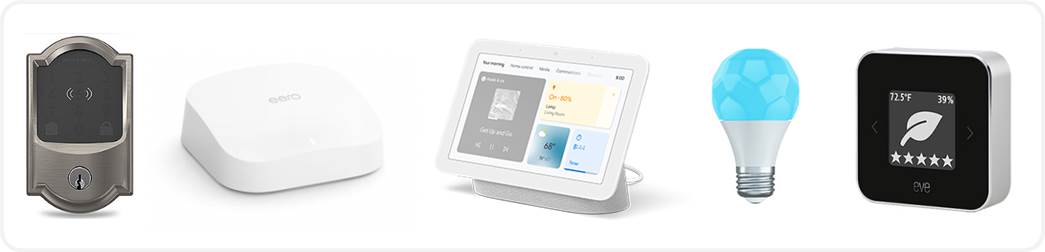
Figure below shows Thread’s support for various IP protocol-based application layers, such as Matter, DALI+, HomeKit, etc. A user can choose any application layer, or even build their own.
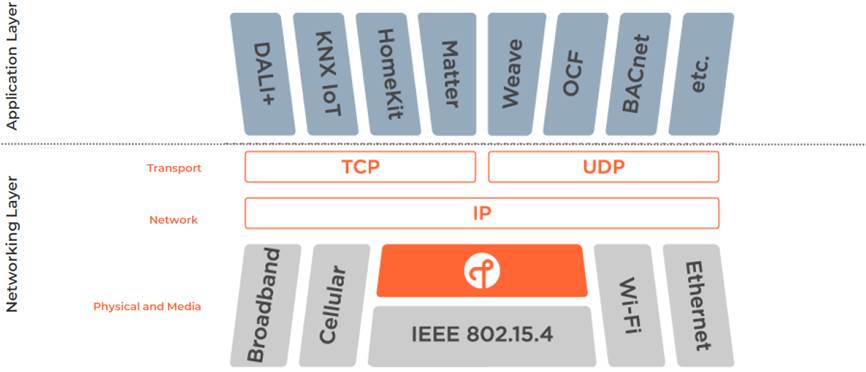
Image: Thread Group
Matter – the new standard for smart homes
Matter is an IP-based application-layer standard for smart homes developed by the Connectivity Standards Alliance (CSA). It defines how devices make their features available to compatible smart home platforms and how those platforms control them. This makes it easier for products from different brands to work together. Available features depend on what the device and platform support.
The figure below illustrates Matter’s operation structure. Basically, the network is divided into the “Ecosystem and cloud”, “Application Layer”, “Network/Transport Layer”, and “Physical/Link Layer (MAC/PHY)”.
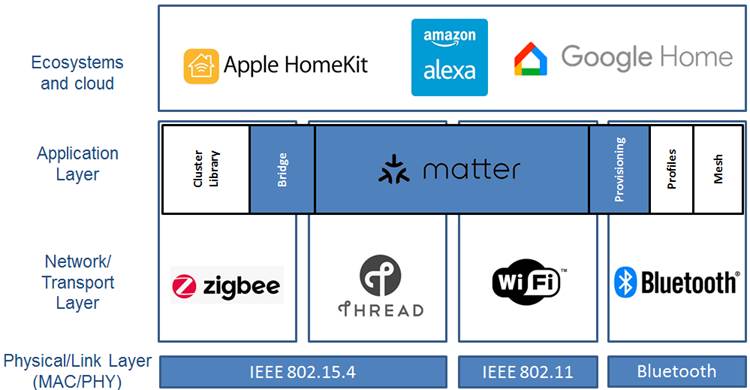
Matter devices communicate during normal operation over Wi-Fi, Ethernet, or Thread. Bluetooth Low Energy (BLE) is commonly used during initial setup, known as commissioning. For example, it can pass Wi-Fi or Thread network credentials to a device during pairing. Existing Zigbee devices can join a Matter ecosystem through a compatible Matter bridge. Available features depend on what the bridge and smart home platform support.
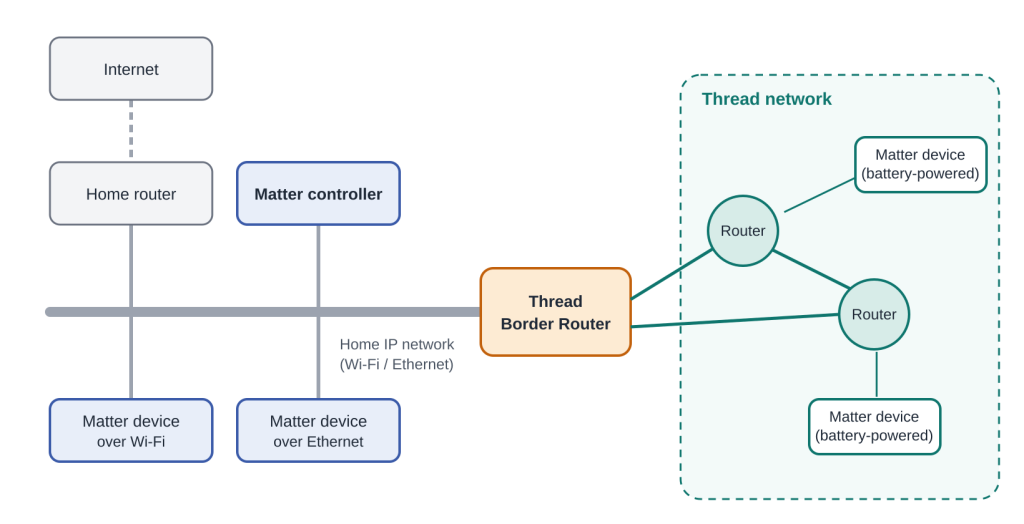
A Thread Border Router connects the Thread mesh to other IP networks in the home, allowing a Matter controller on another network to communicate with Matter devices that use Thread.
Summary
Thread is one of the network technologies supported by Matter. Matter products can also use Wi-Fi or Ethernet. For Matter certification, products must satisfy the applicable certification requirements set by the organizations responsible for the underlying technologies they use. Products that use Thread must meet the applicable Thread certification requirements.